Introduction
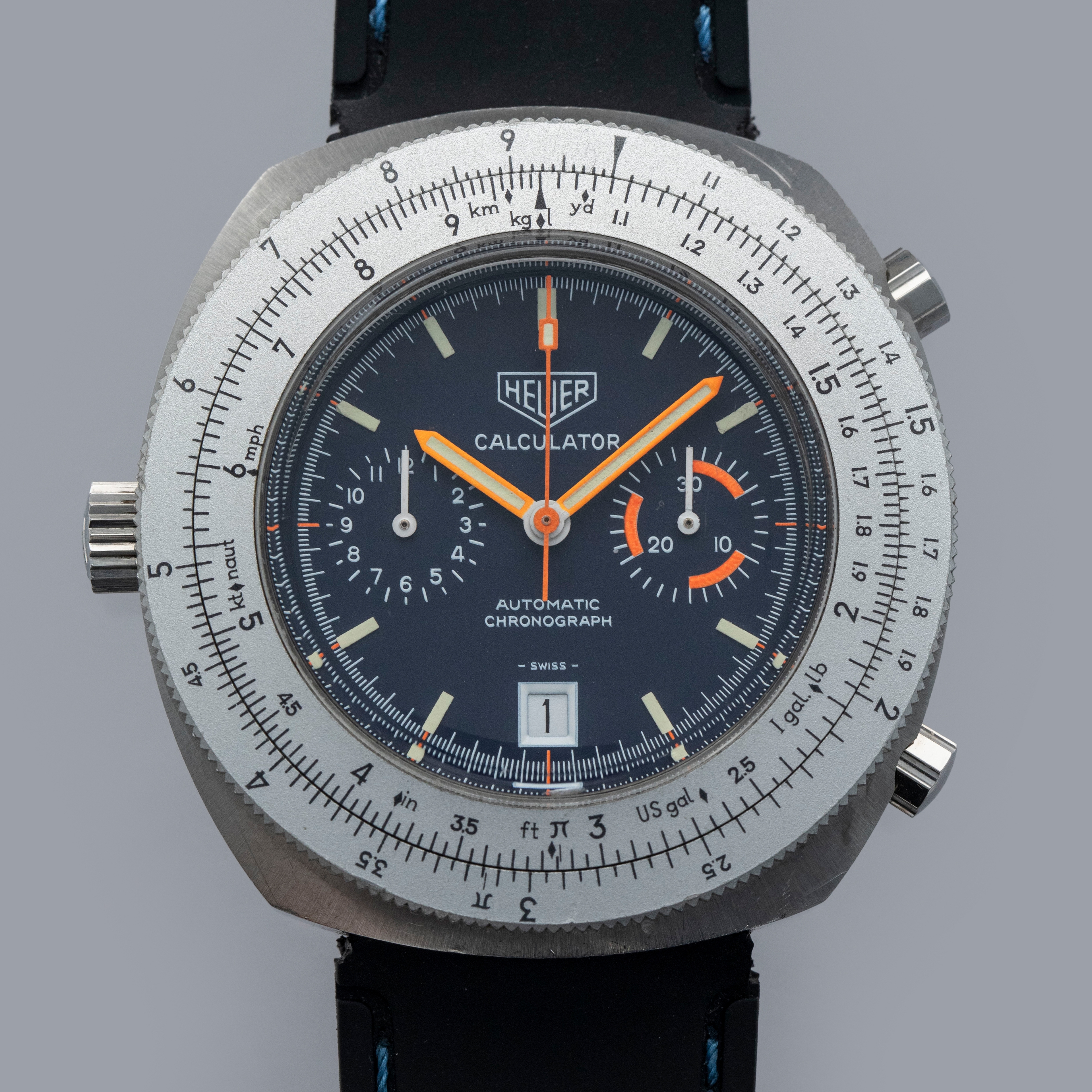
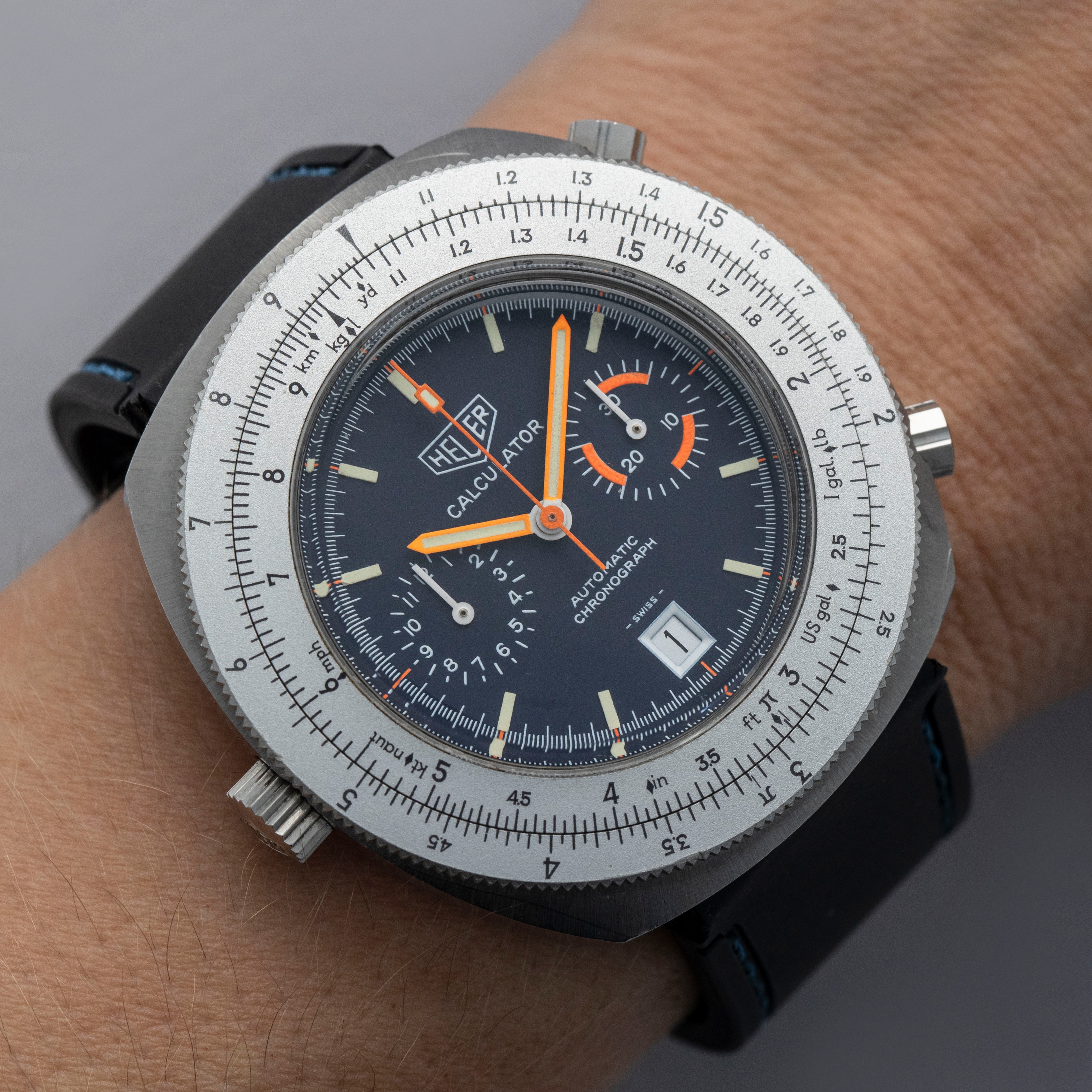
The Heuer Calculator is one of the most unapologetically functional chronographs of the 1970s, created at a time when the company was producing increasingly specialised instruments for drivers, pilots and professionals. Introduced in 1972, its defining feature is the enormous circular slide rule surrounding the dial. By rotating the outer scale against the fixed inner scale, the wearer could perform multiplication and division as well as calculations and conversions involving speed, distance, fuel consumption, weight and volume – effectively placing a mechanical calculator on the wrist years before electronic devices made such tools redundant.
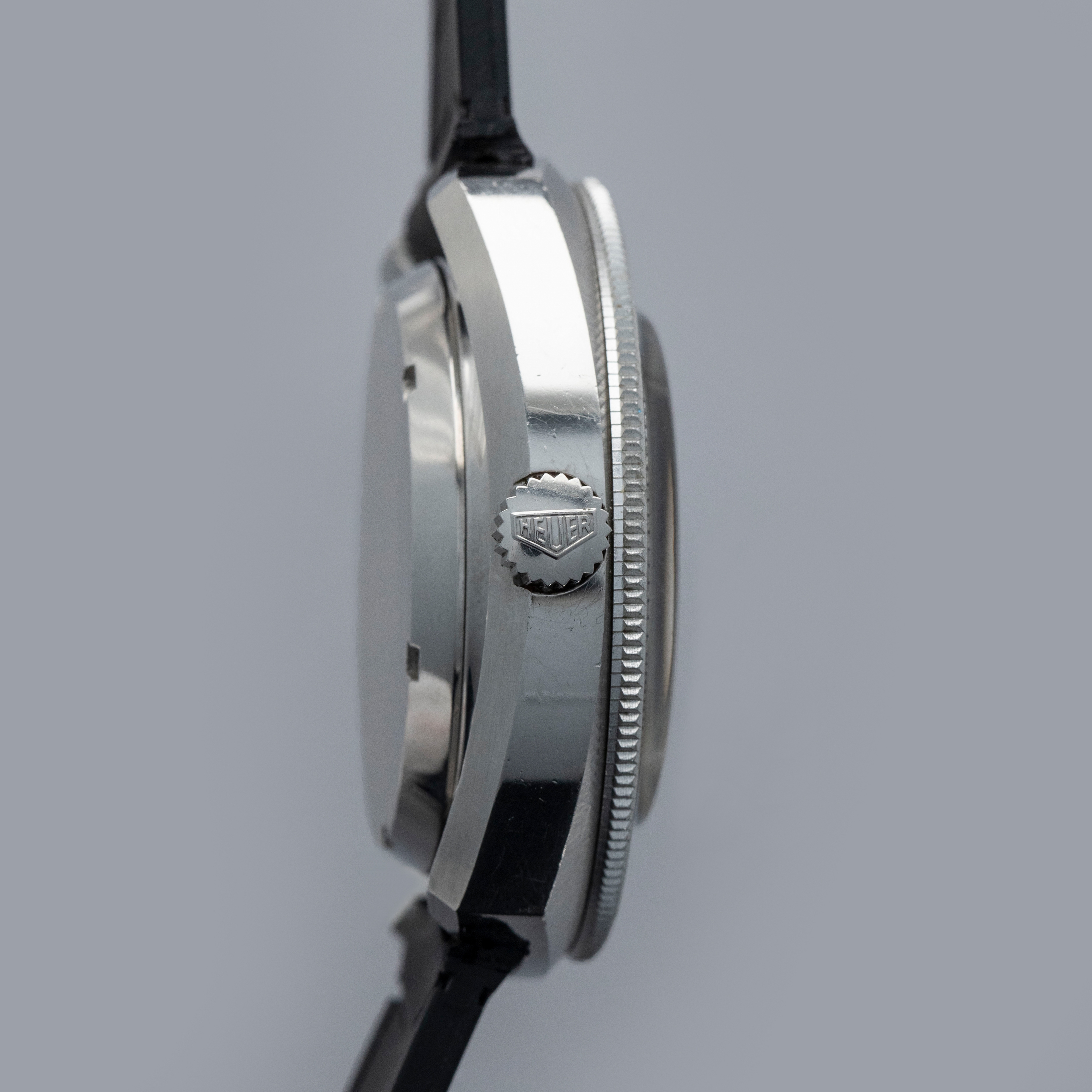
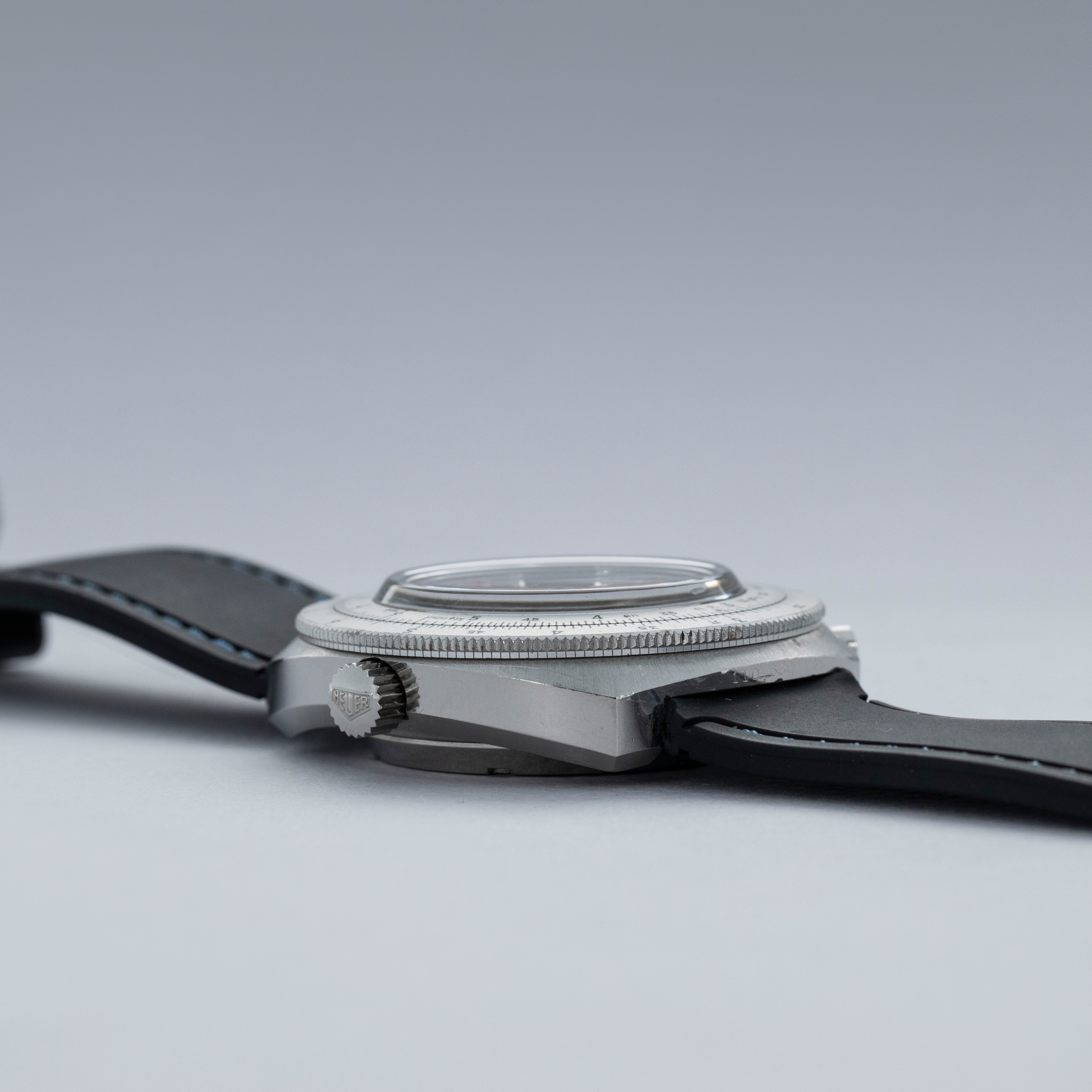
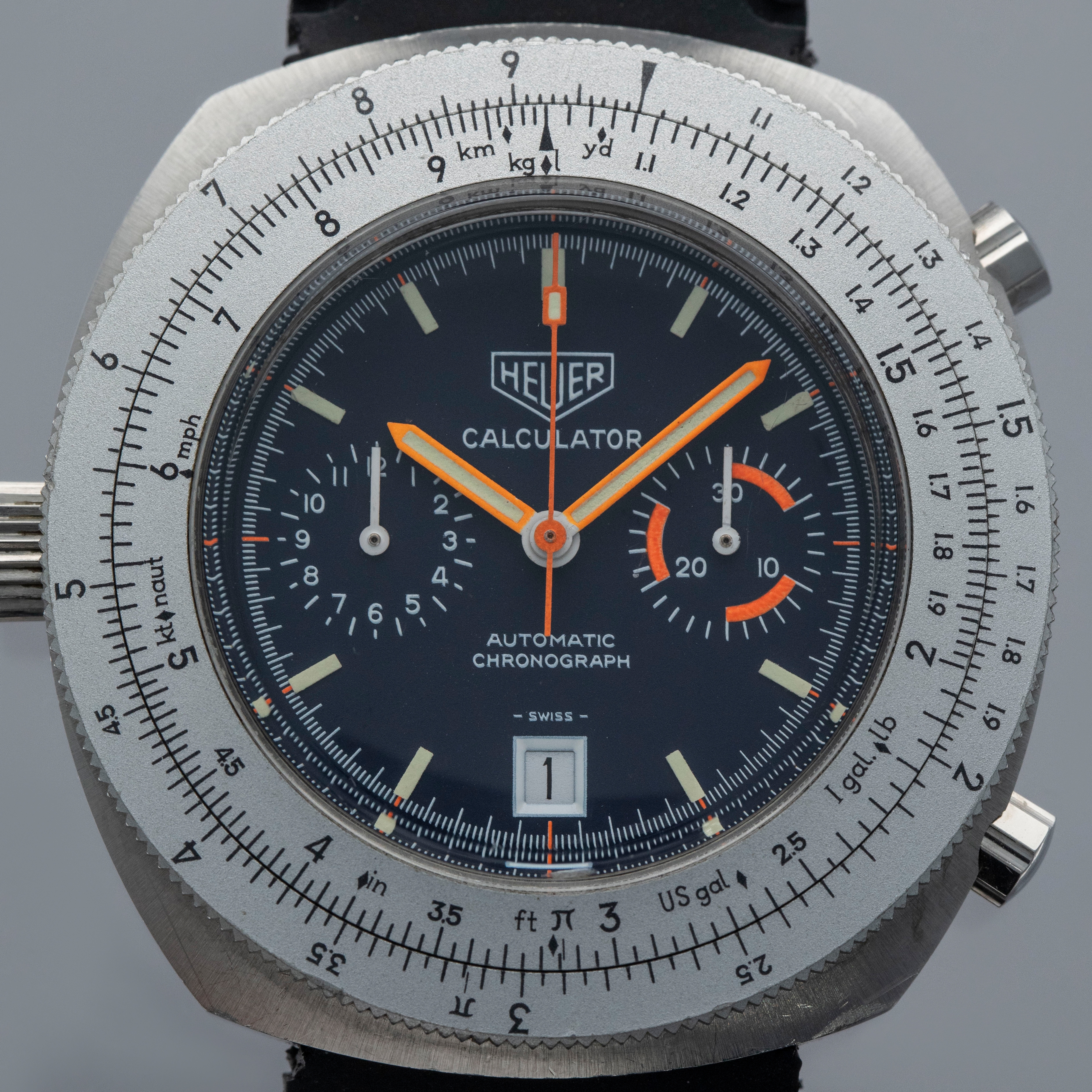
Reference 110.633 combines that functionality with the bold design language that defined Heuer during the period. Its substantial 45mm stainless steel tonneau case surrounds a blue dial punctuated by vivid orange chronograph hands, while the crown positioned on the left side of the case immediately identifies the automatic Chronomatic architecture within. Power comes from Heuer's calibre 12, pairing a micro-rotor automatic base movement with a Dubois-Dépraz chronograph module. Large, technically ambitious and unmistakably of its era, the Calculator represents Heuer at perhaps its most tool-focused: a watch designed not simply to measure elapsed time, but to perform calculations directly from the wrist.
Loupe This Scorecard
Grade
8.5
Status
Vetted & Approved
Included
Watch Only
Est. value range
$2,000 – $4,000
The Details
Brand
Heuer
Dimensions
45mm x 15.5mm
Model
Calculator
Movement
Automatic Heuer calibre 12
Reference
110.633
Bracelet
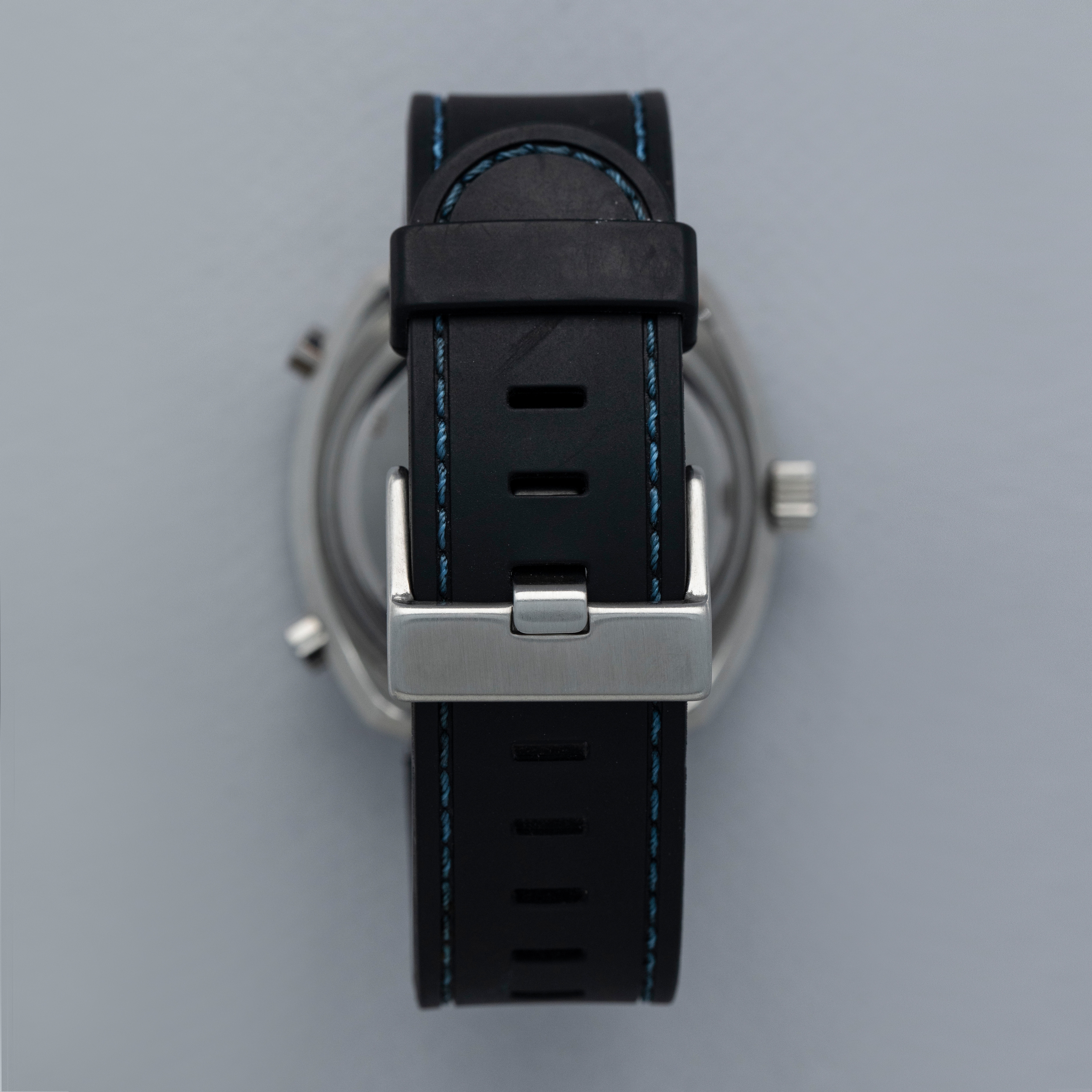
Rubber strap
Year
Circa 1970s
Condition
Excellent
Material
Stainless steel
Included
Watch only
Dial Color
Blue
THE DIAL
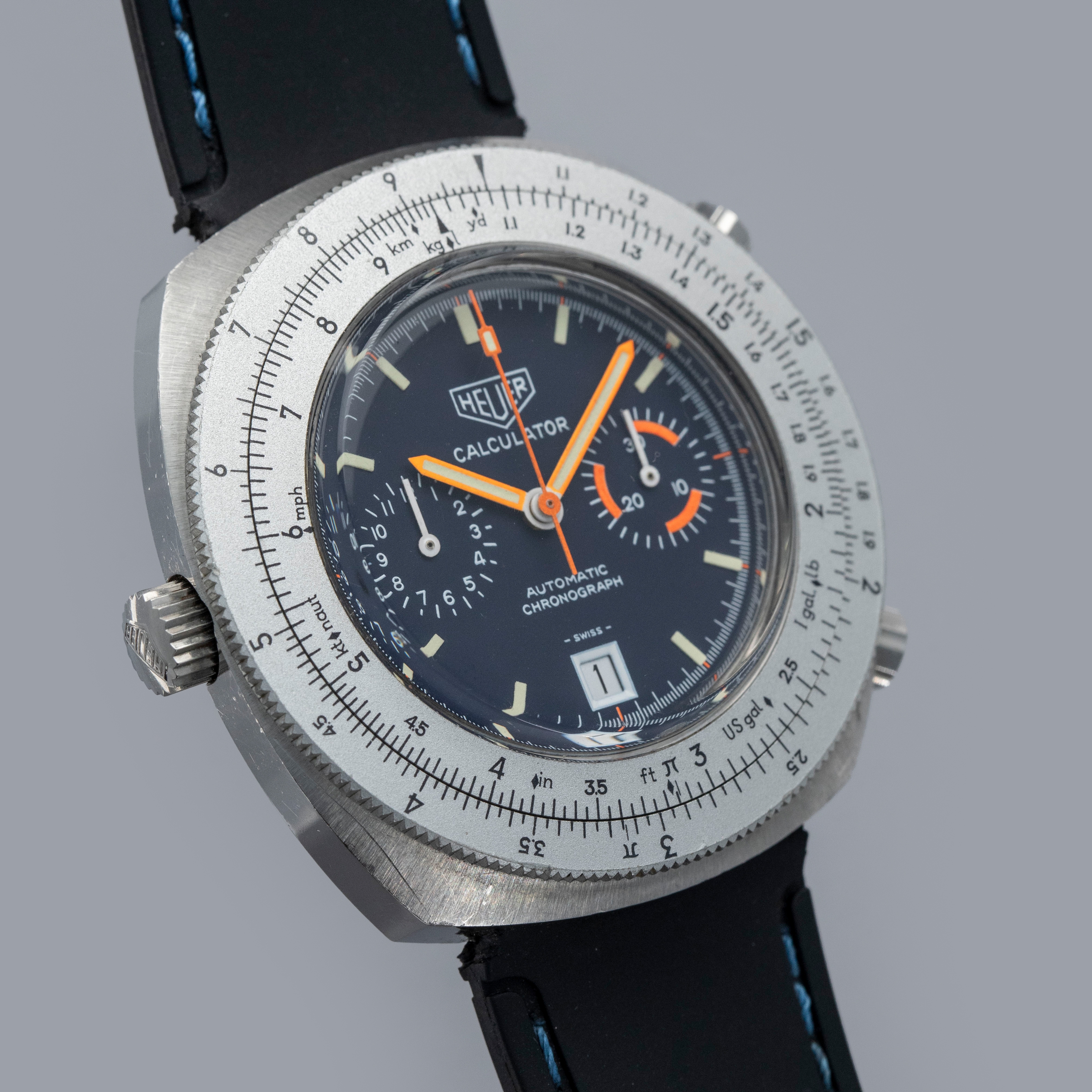
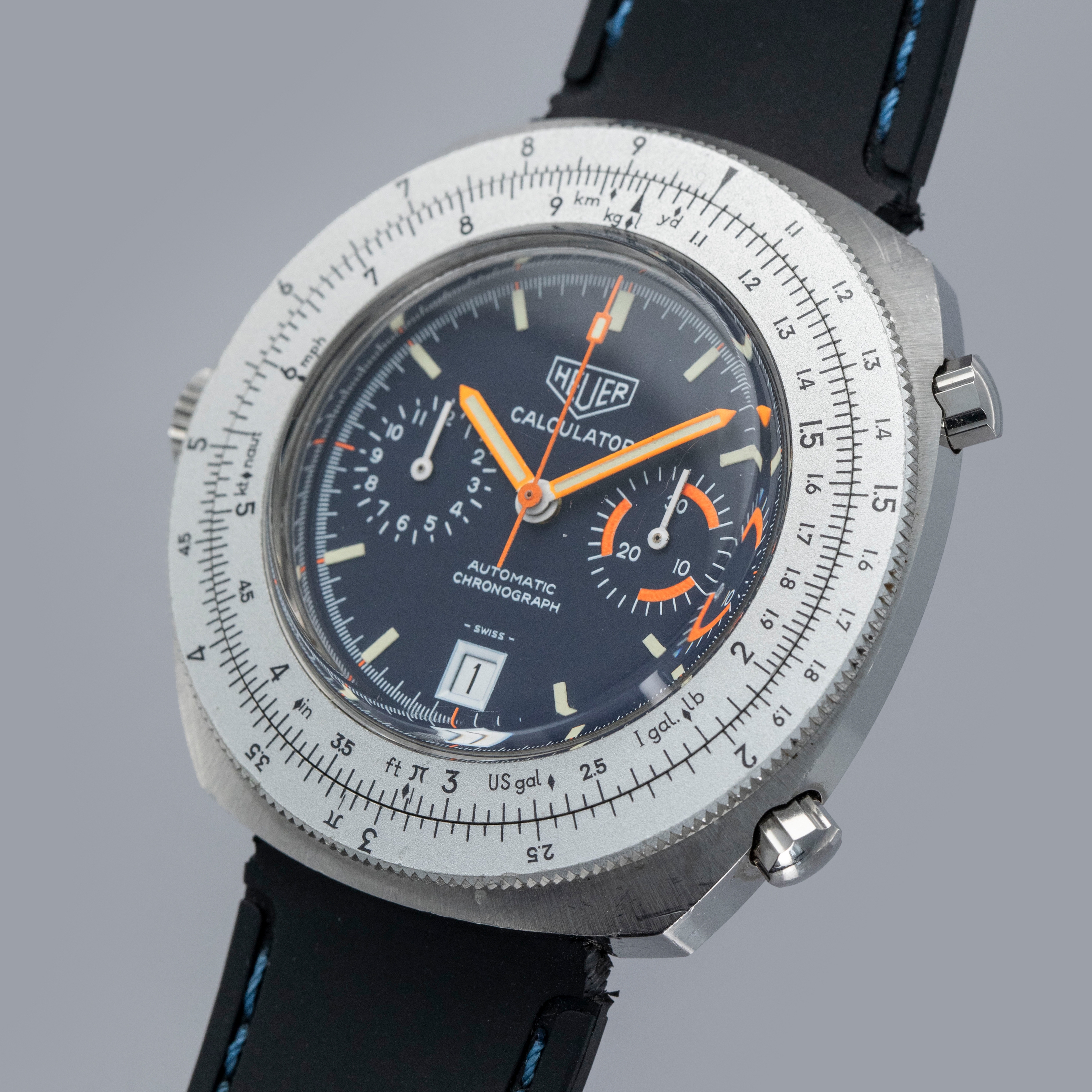
The blue dial combines two recessed chronograph registers with vivid orange hands and a date aperture at 6 o'clock. Surrounding it are the Calculator's defining logarithmic scales: a fixed inner ring and rotating outer bezel that together form a circular slide rule, allowing a surprisingly broad range of mathematical calculations and conversions to be performed directly from the wrist.
THE CONSTRUCTION
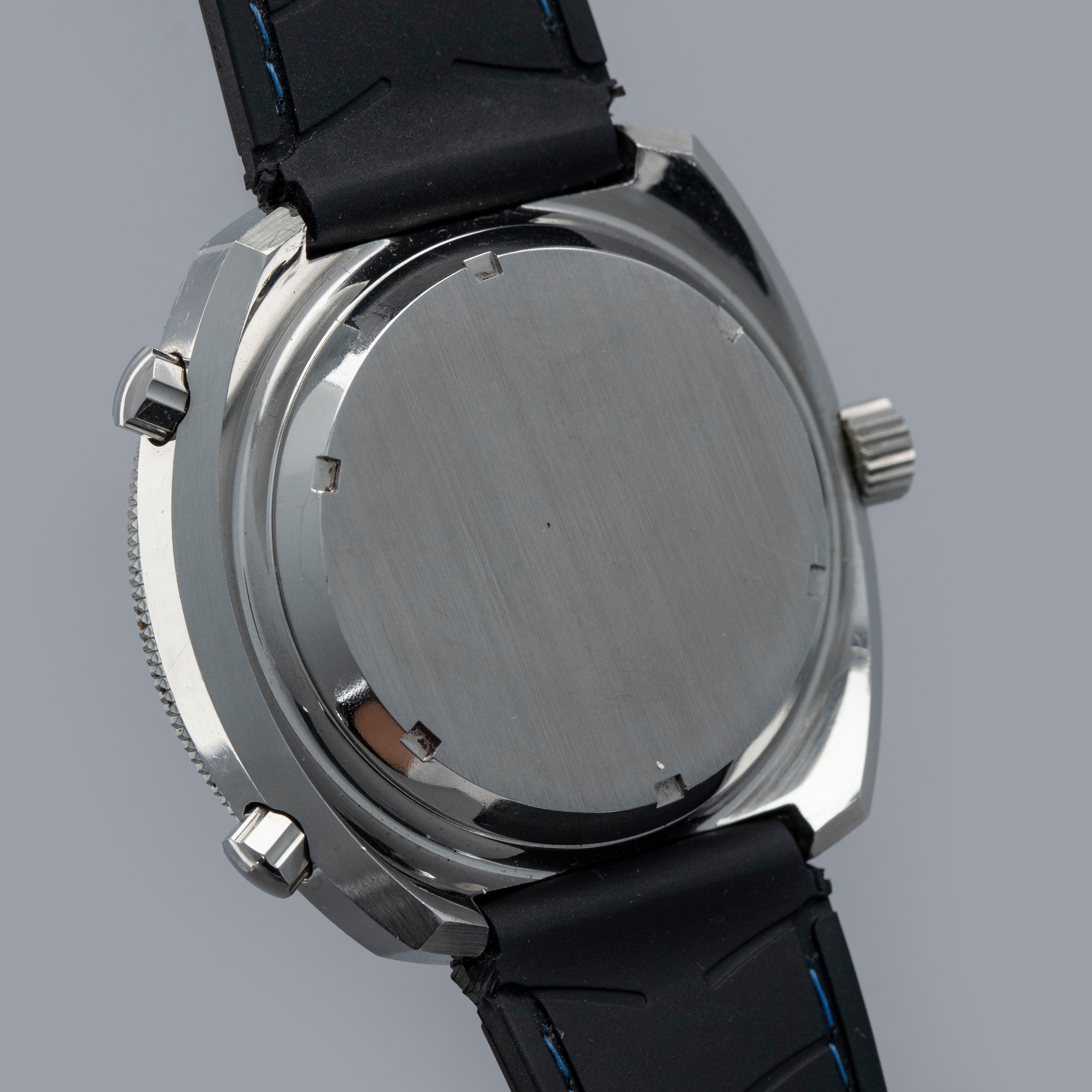
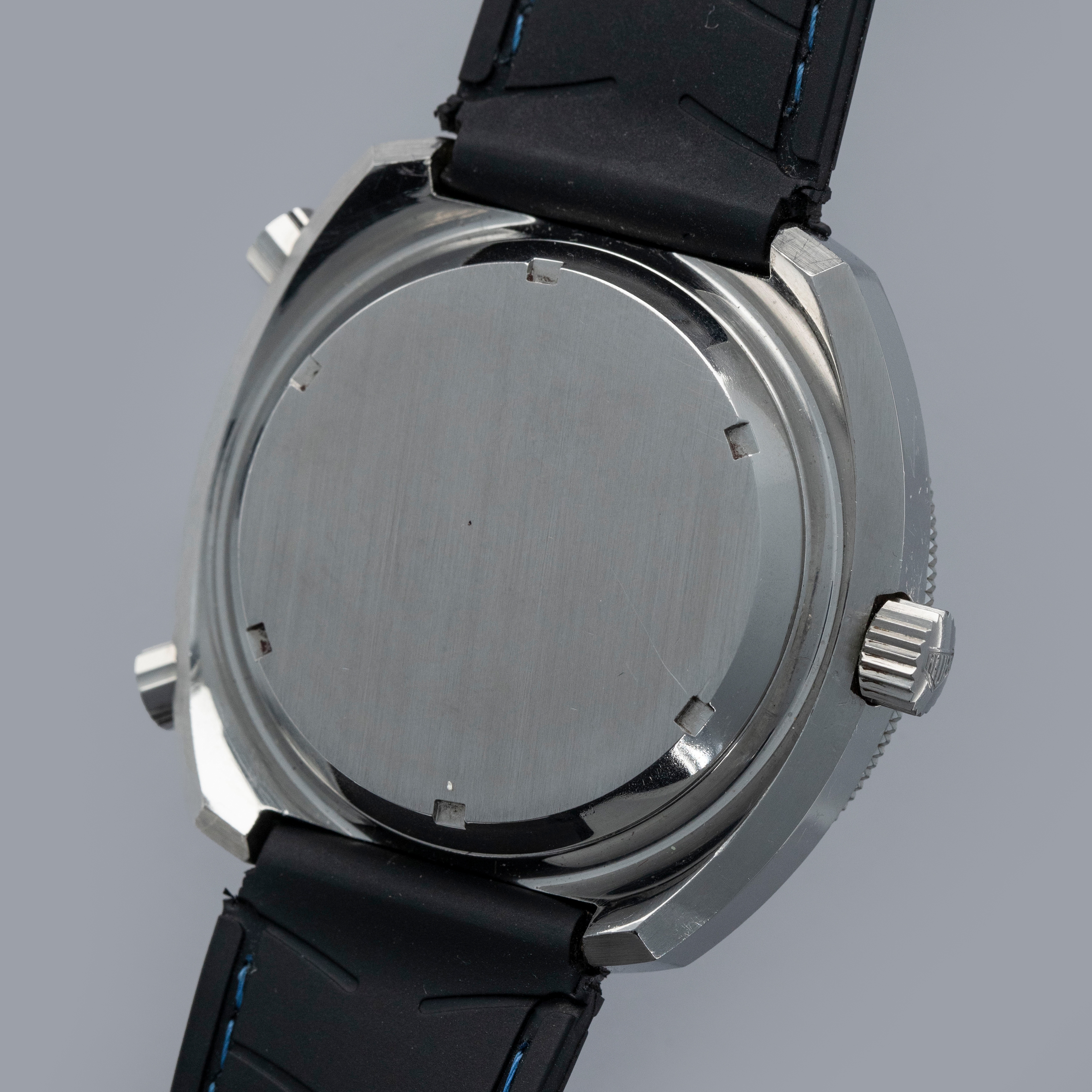
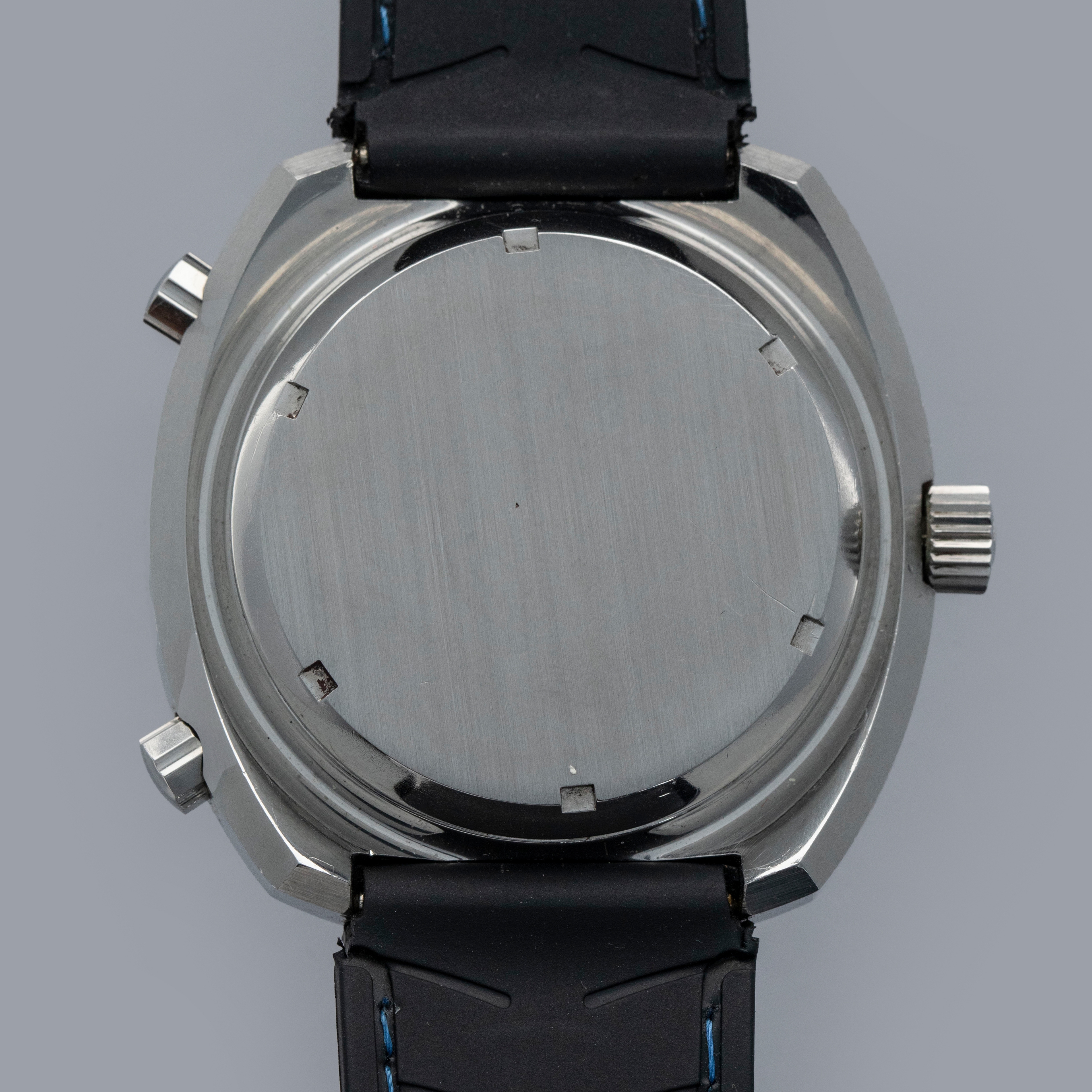
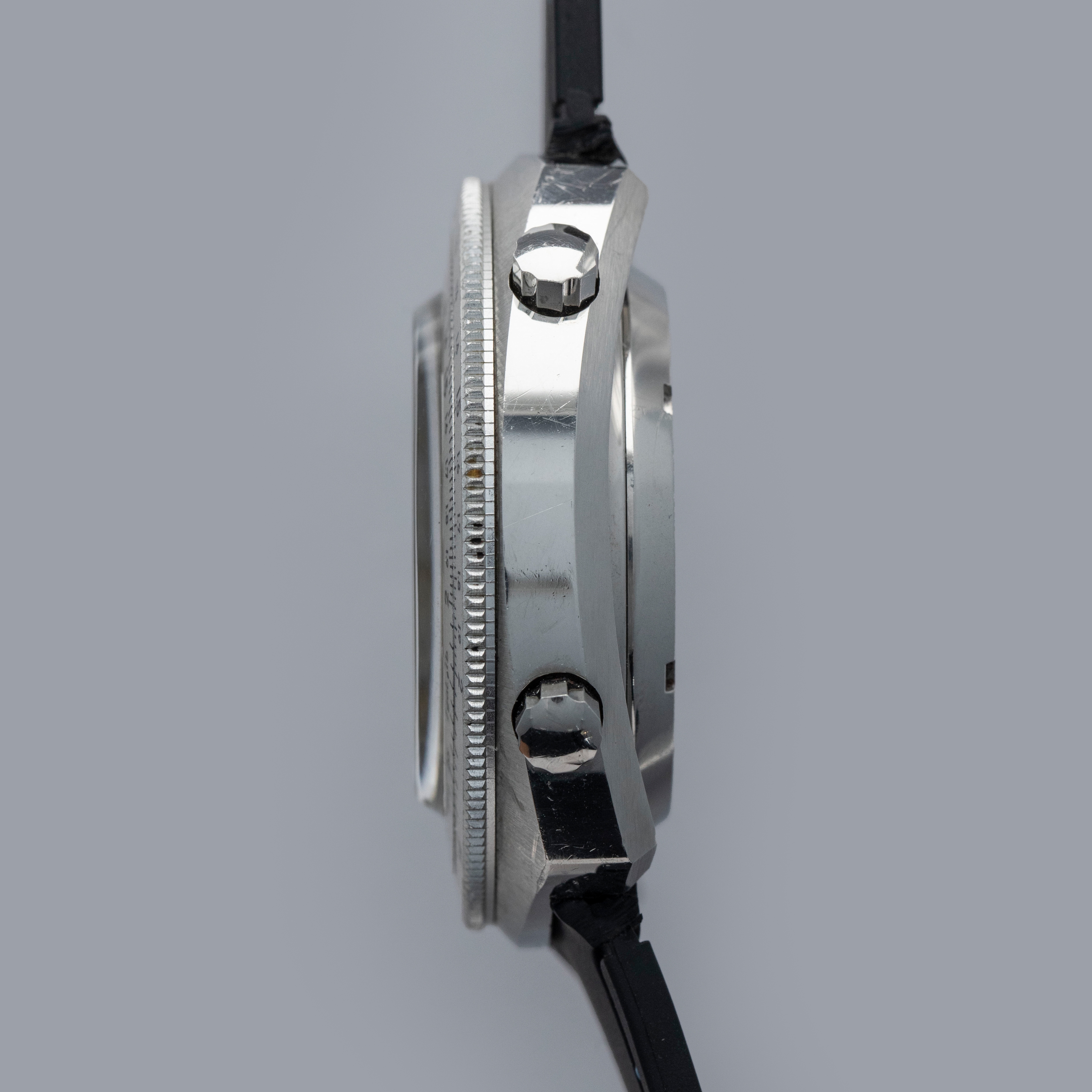
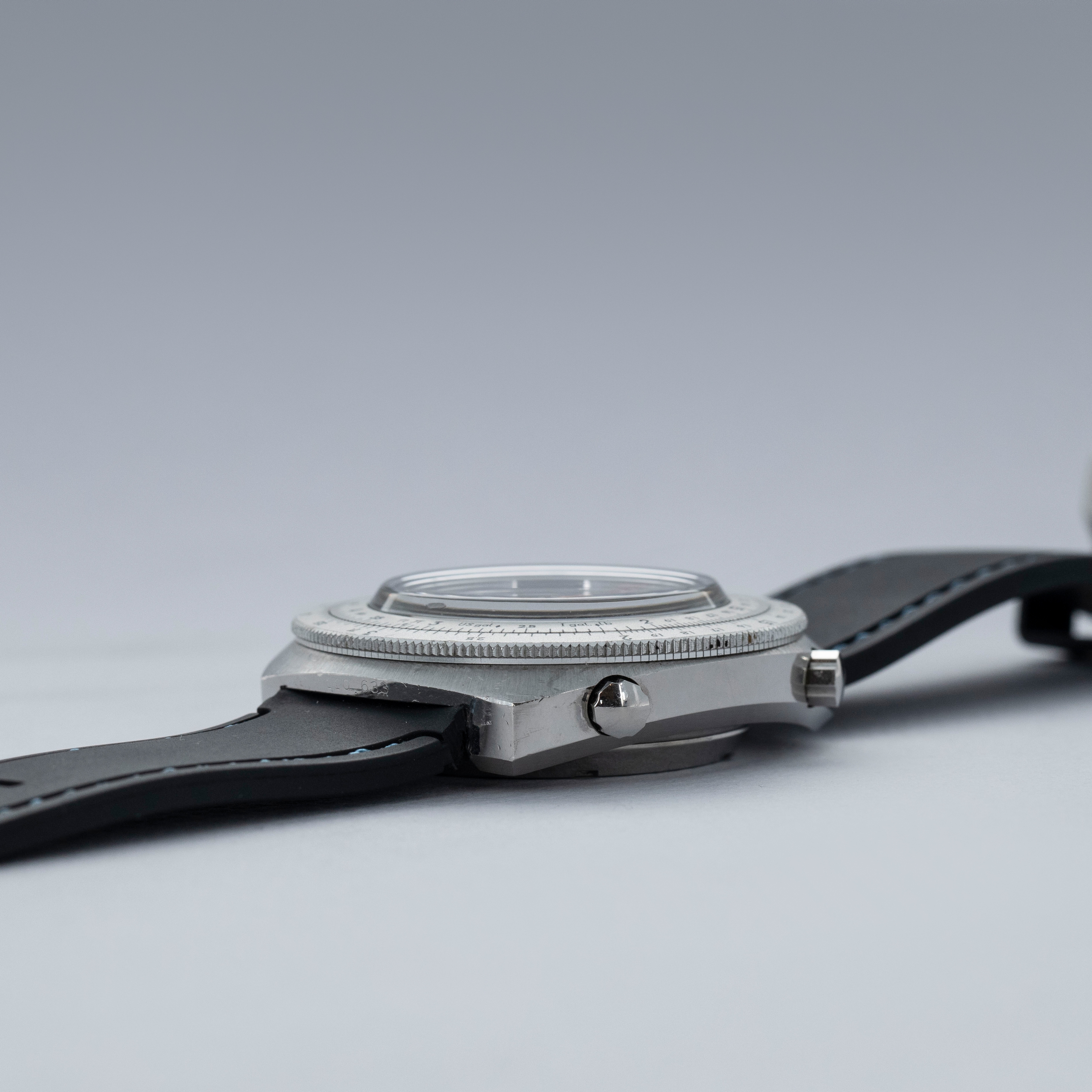
At approximately 45mm in diameter and 15.5mm thick, the Calculator was exceptionally large by 1970s standards, but its dimensions were dictated in part by the extensive slide-rule scales surrounding the dial. The stainless steel tonneau case, round chronograph pushers and left-side crown give it the muscular, purpose-built appearance characteristic of Heuer's professional watches from the period.
TIMING MACHINE READOUT
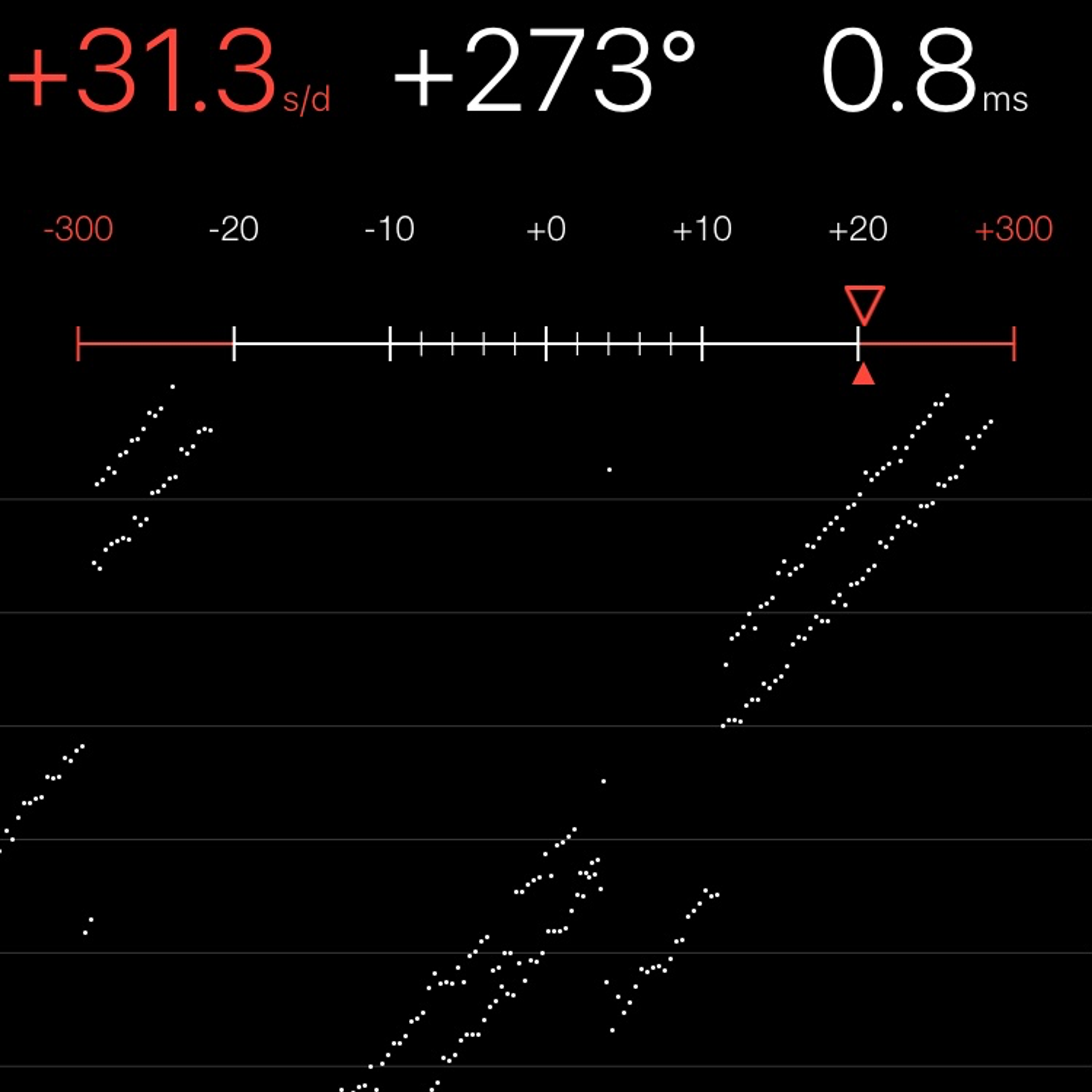
This reading was taken (crown down) with a ONEOF Accuracy Boutique Edition timing machine at time of cataloging. It is provided as a courtesy only, and shall not be construed as a warranty or guarantee of any kind. Please refer to our terms and conditions of sale for more information.
Condition
Watch is in overall excellent condition. The steel case is very well defined, with surface scratches and small nicks to the case edges in places. The bezel is in excellent condition, with some light nicks to the edge and crisp markings throughout. The dial is generally in excellent condition, with a small mark near 21 on the elapsed minutes register and small chips to the edge of the luminous material at 2 and 10 o’clock. The dial text remains excellent, although during manufacture the dial appears to have been very slightly mis-stamped during one of the printing stages, resulting in a slightly blurred effect. It is fitted with a rubber strap.
Our Perspective
The Calculator captures a fascinating moment when a mechanical wristwatch could genuinely function as a portable computing instrument. Its slide rule wasn't decorative but a practical tool, and the enormous case, bright orange indications and unconventional movement architecture all follow that functional brief. Within vintage Heuer collecting it remains far less ubiquitous than the Carrera, Monaco or Autavia, yet arguably demonstrates the company's 1970s obsession with specialist timing instruments more vividly than any of them.


Eric Ku
Co-founder
