Introduction
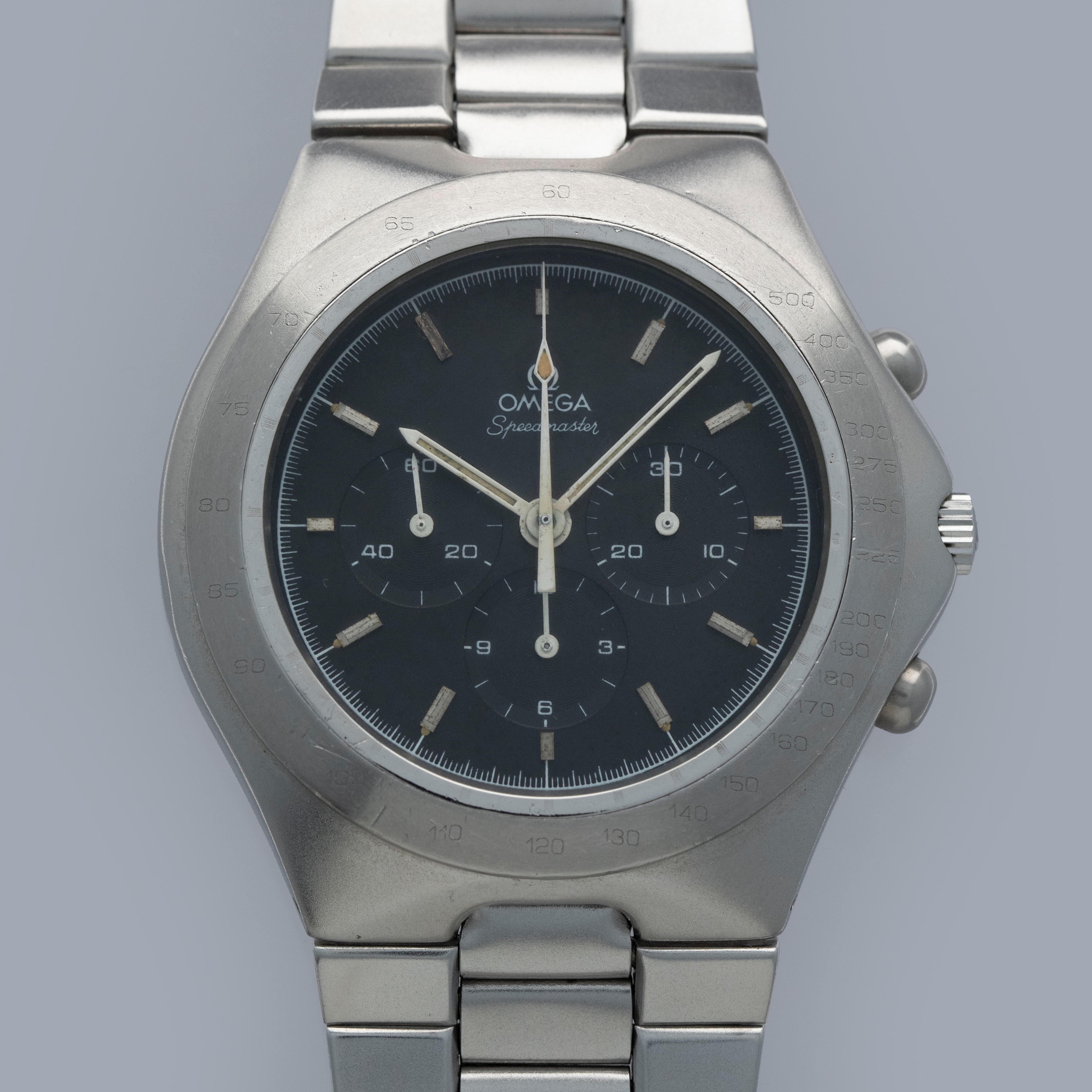
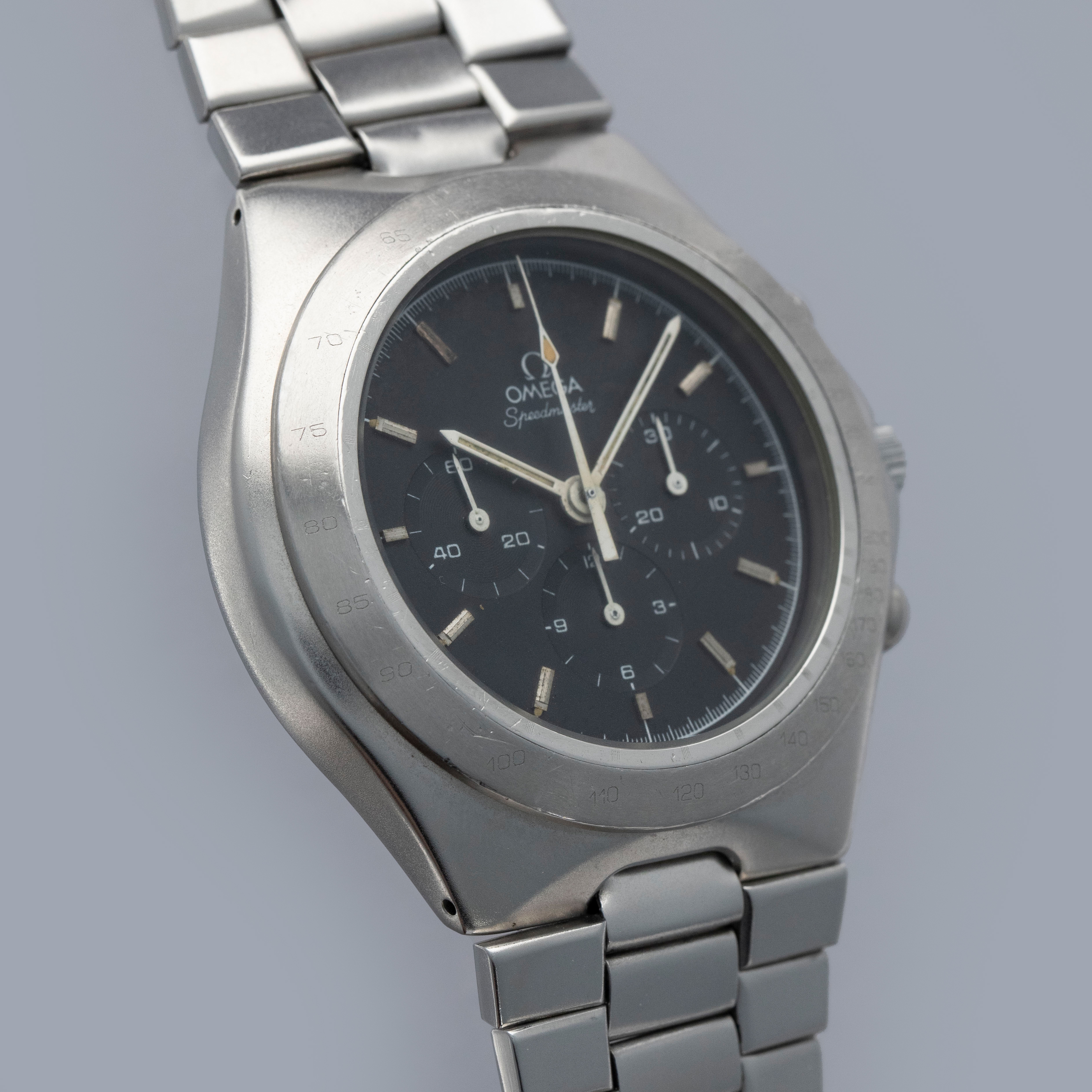
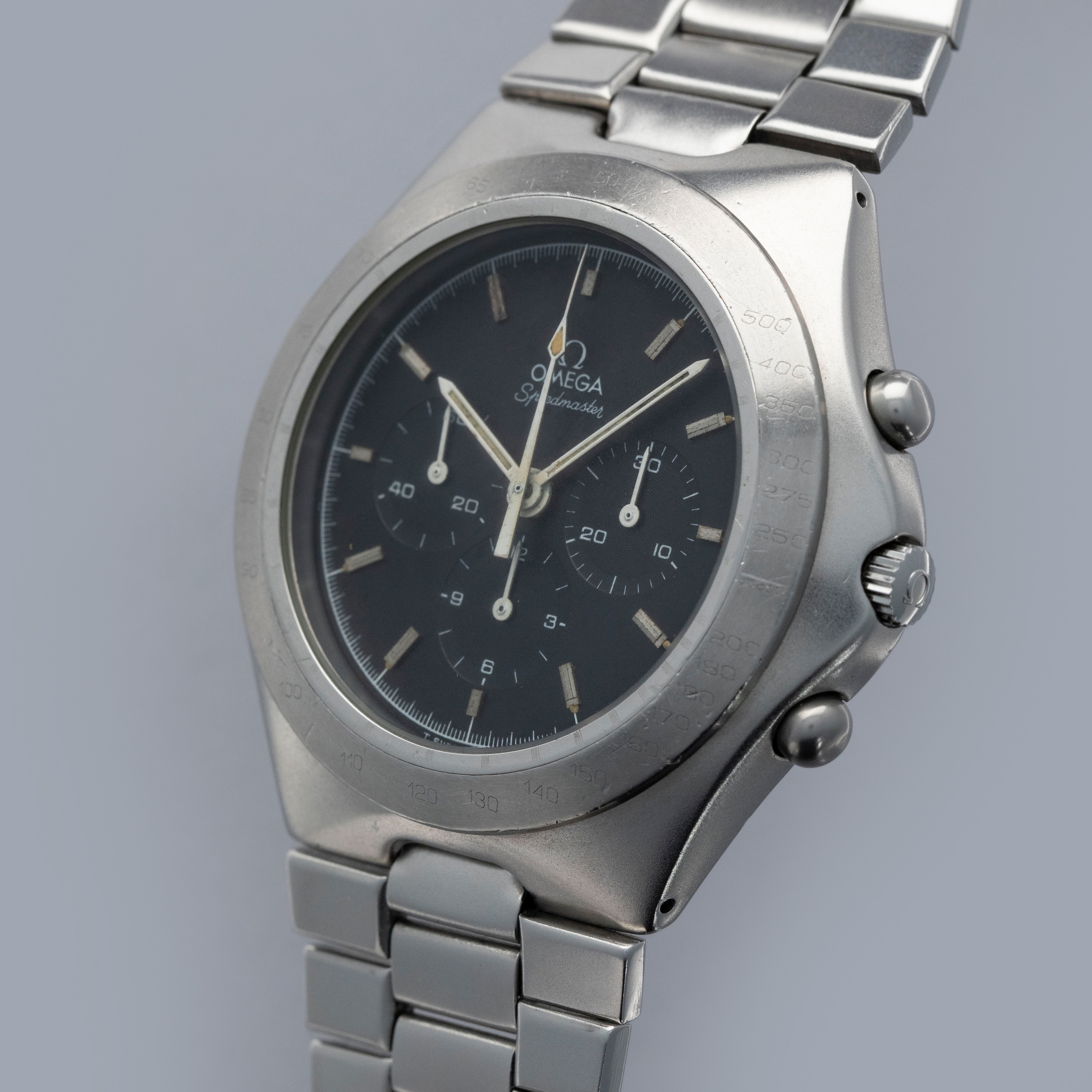
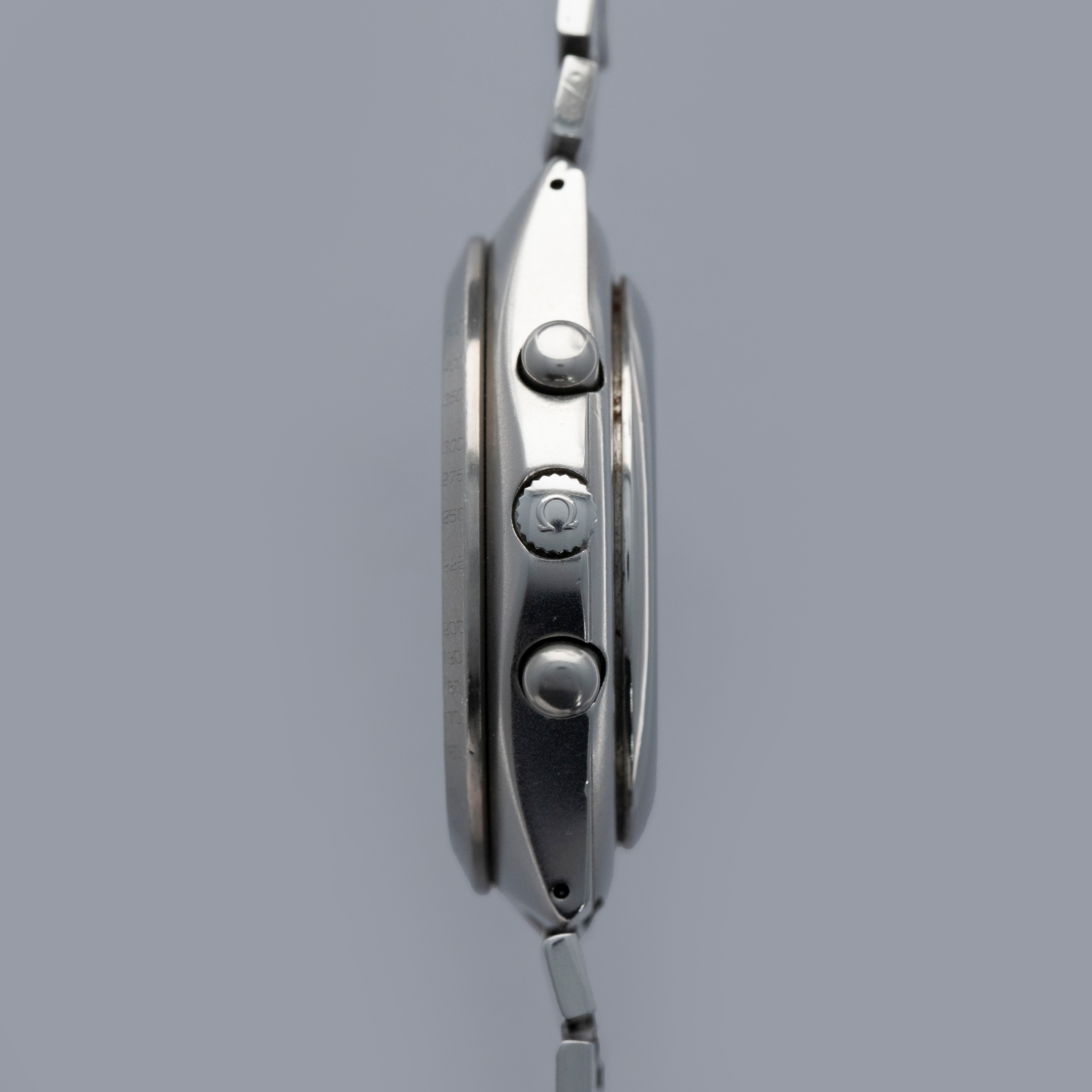
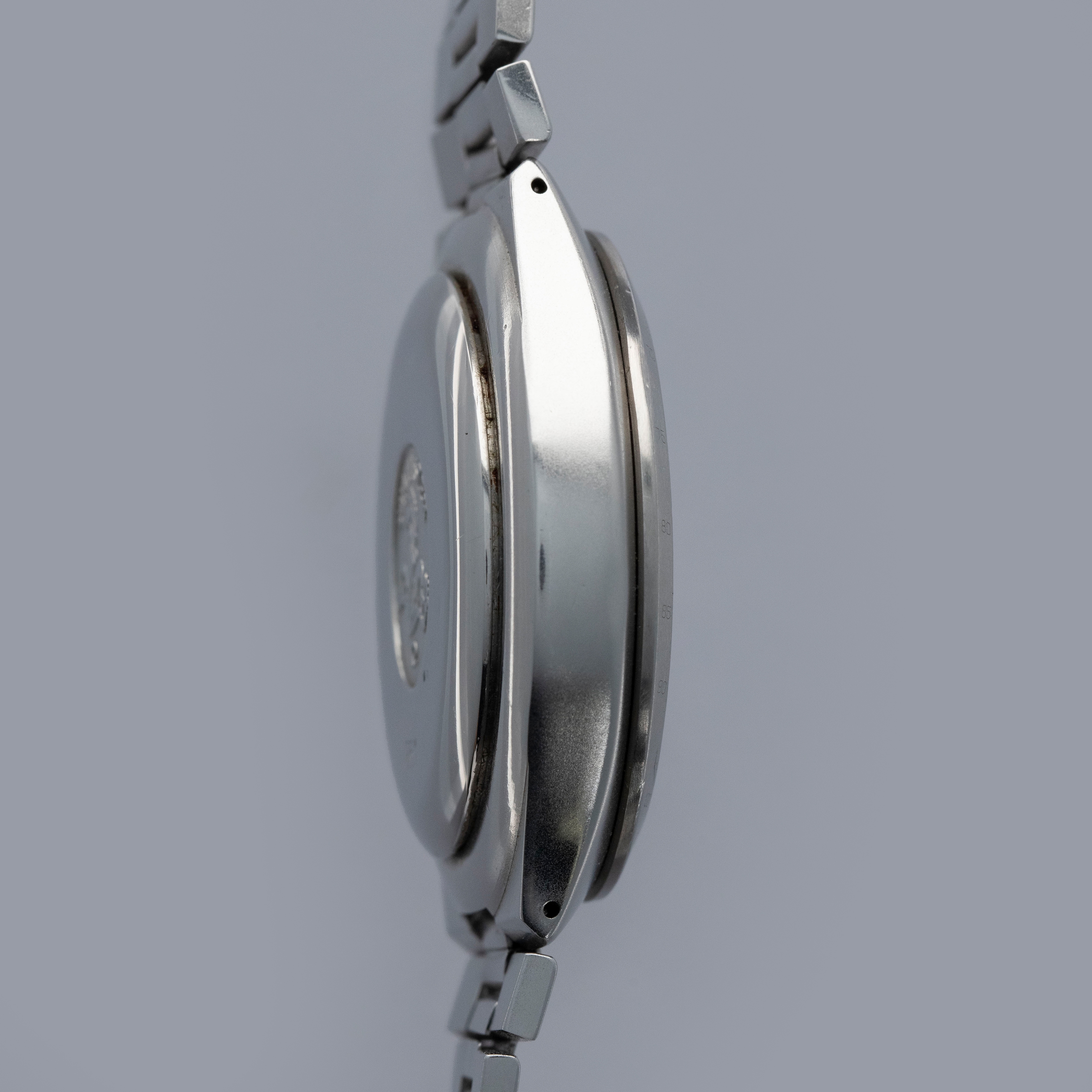
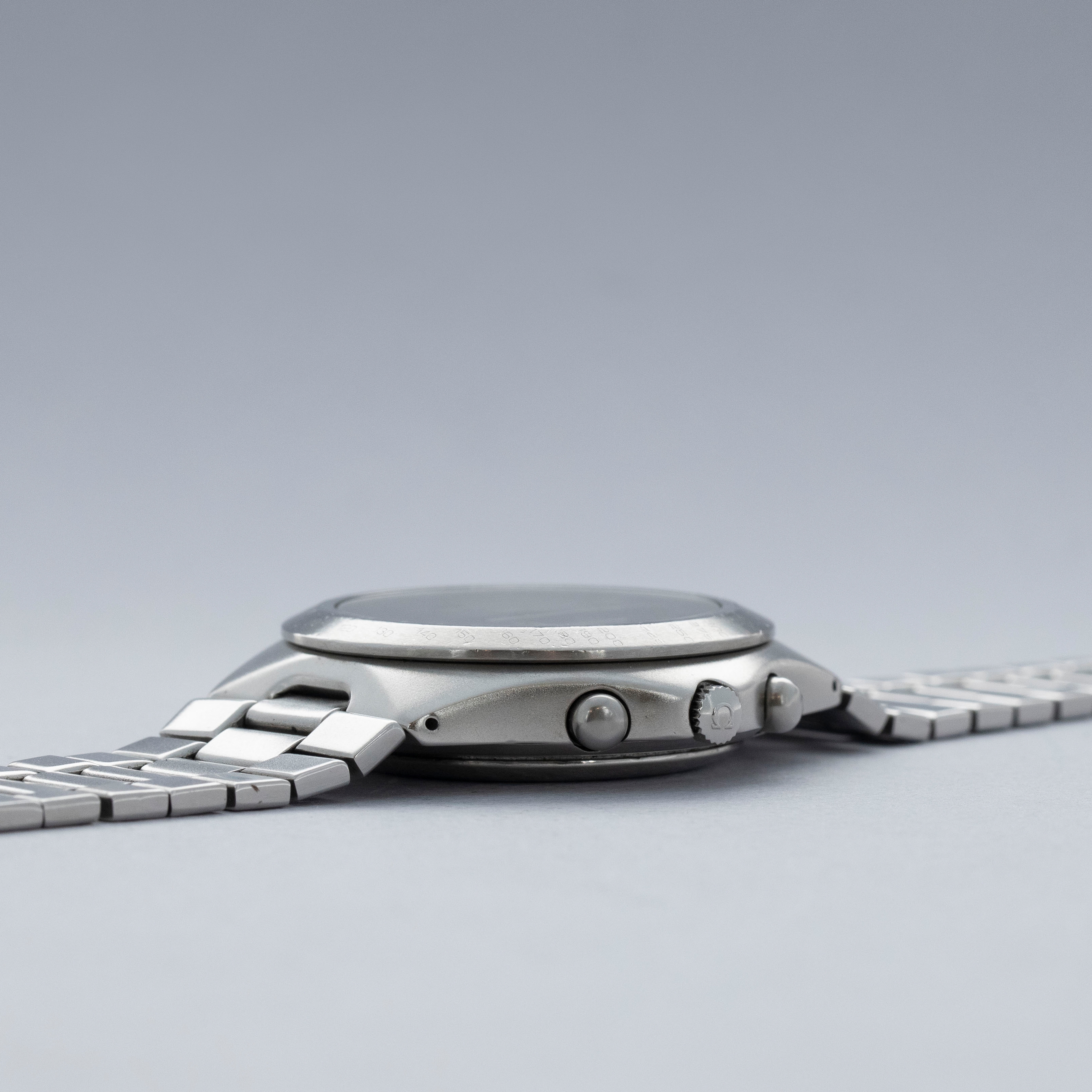
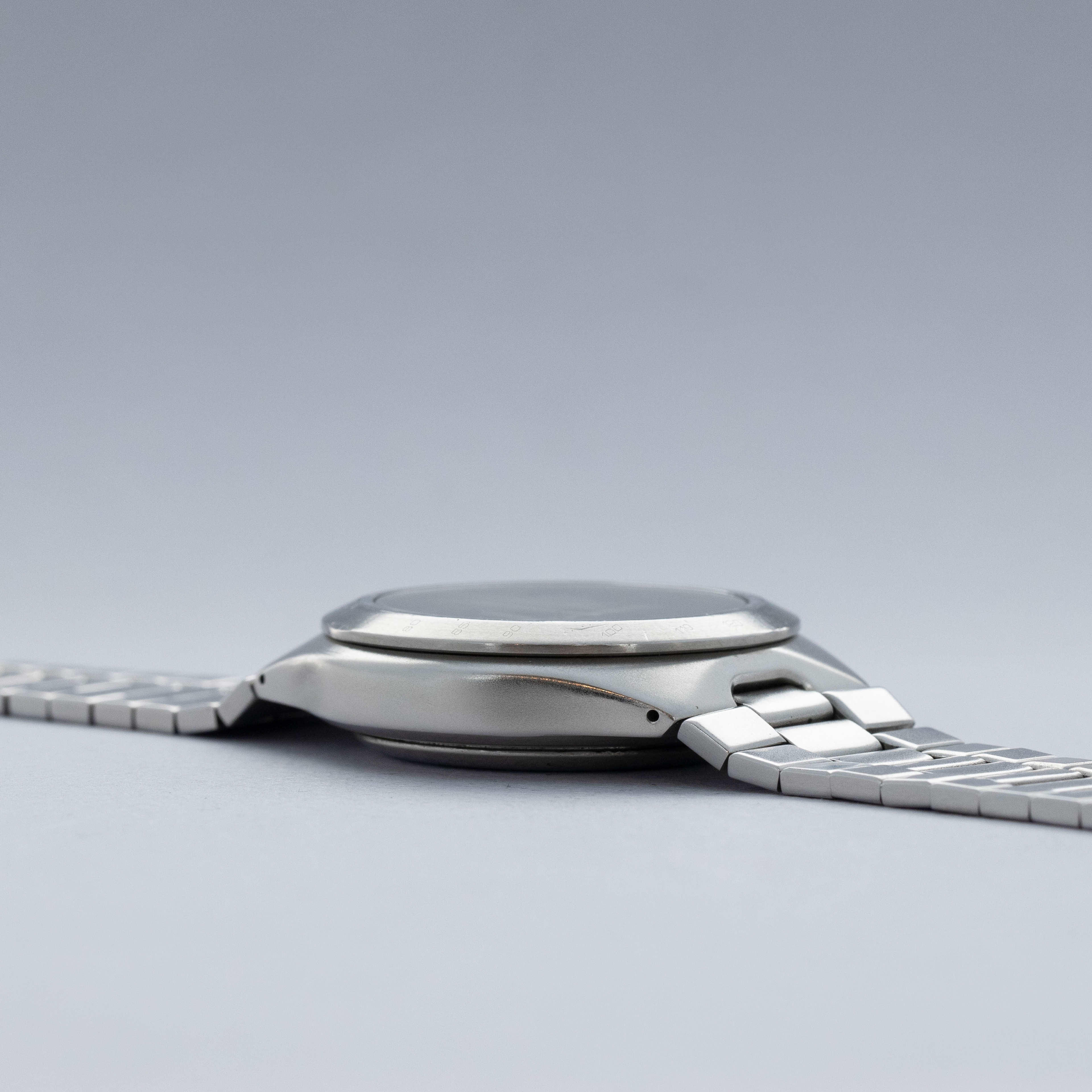
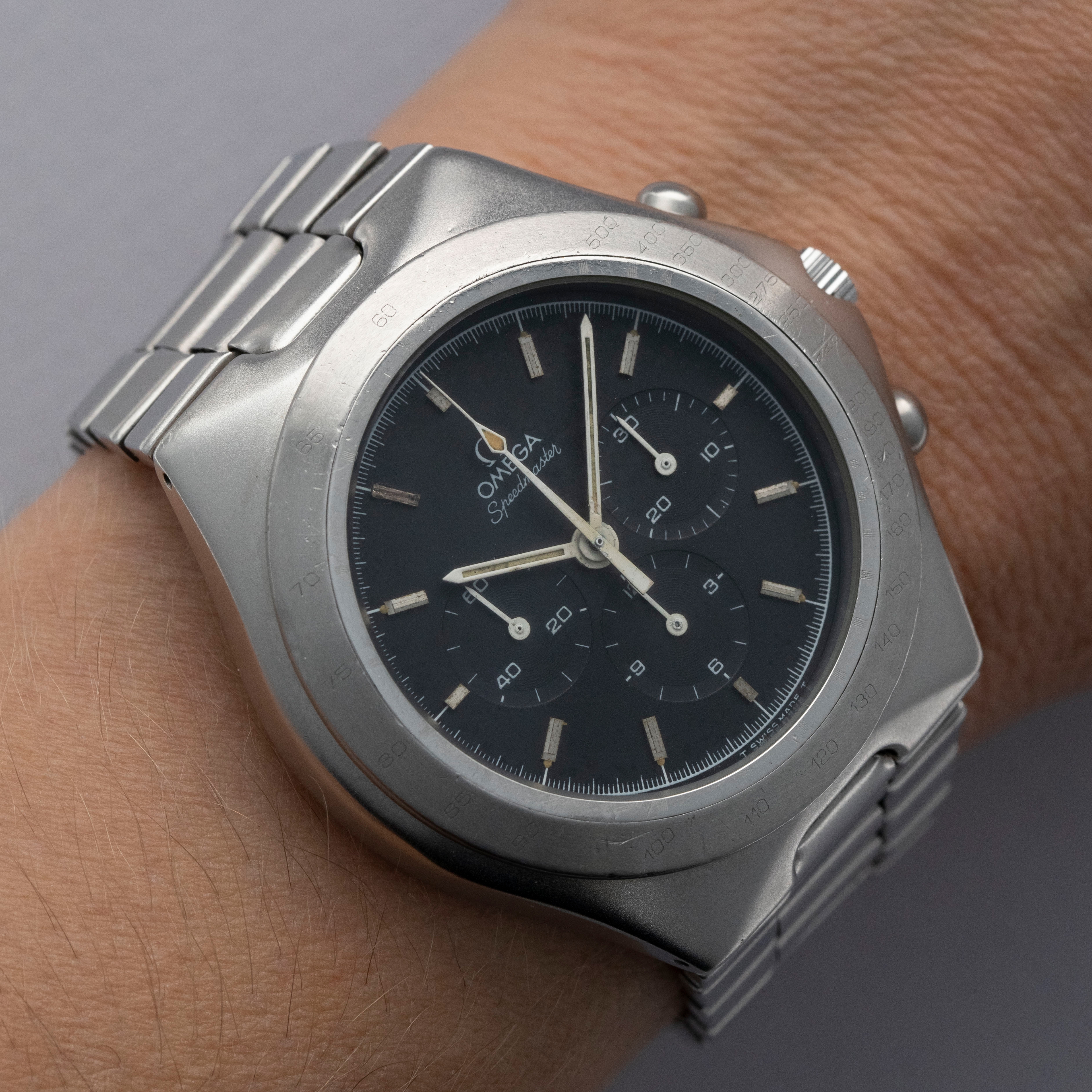
Produced in the early 1980s for the German-speaking European market, the so-called “Teutonic” Speedmaster represents one of the most distinctive departures from the familiar Moonwatch formula. Rather than adapting the traditional lyre-lug case, Omega created an entirely new, forward-looking design defined by its broad bead-blasted surfaces and integrated bracelet. Its architectural form reflected the tastes of the period and placed the Speedmaster alongside contemporary integrated-bracelet watches such as the Royal Oak, Nautilus and Ingenieur, while retaining the manual-wind movement and chronograph layout that connected it directly to the wider Speedmaster family.
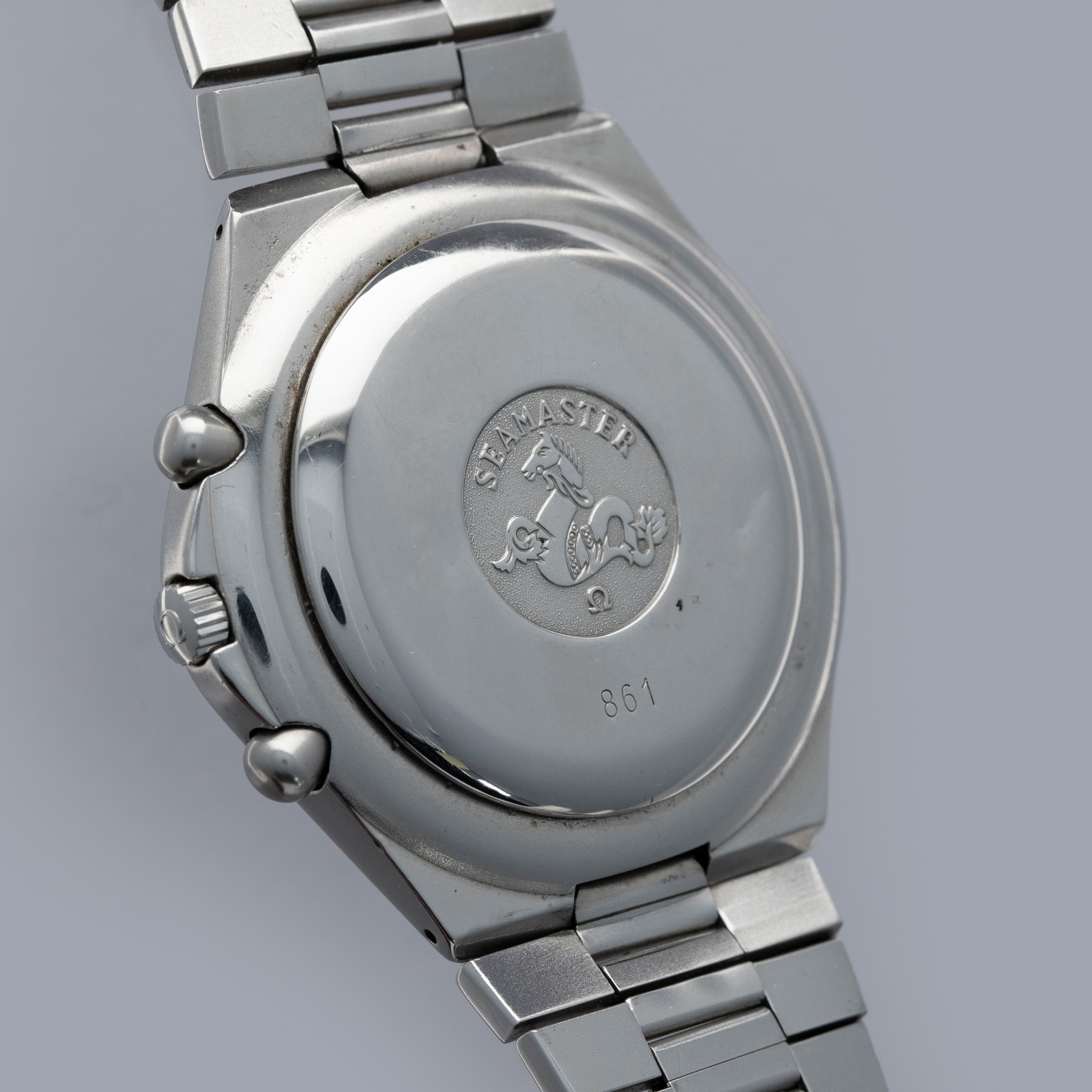
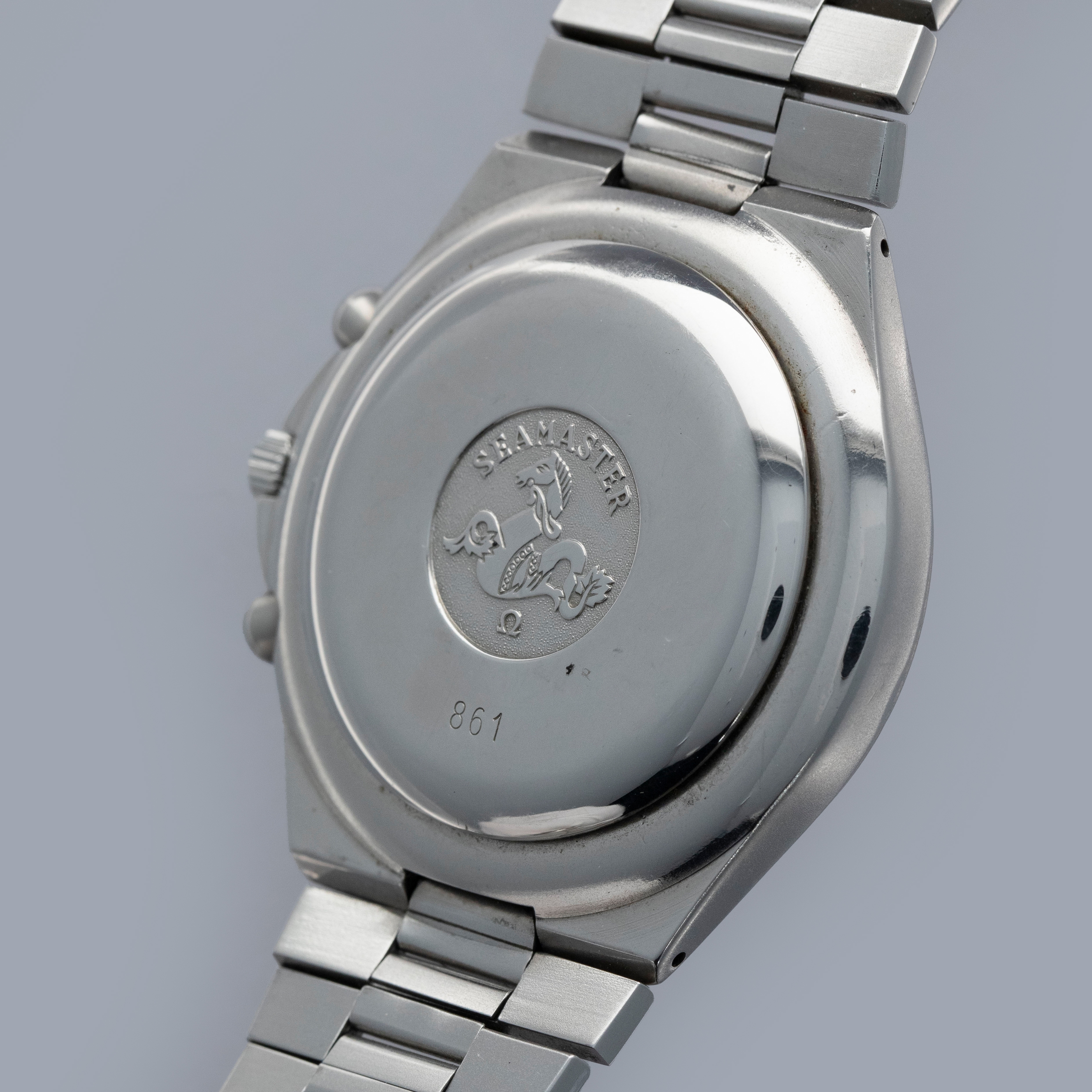
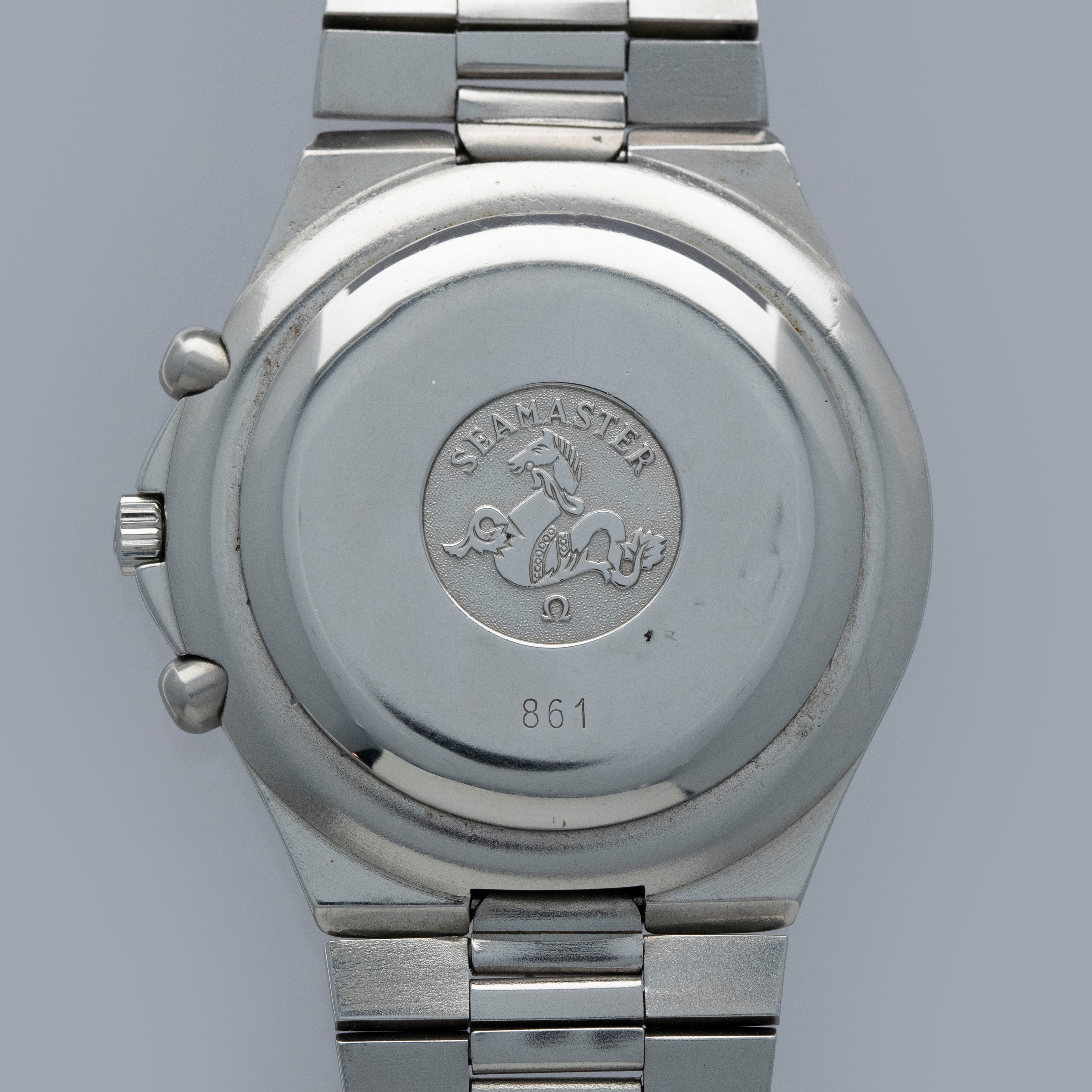
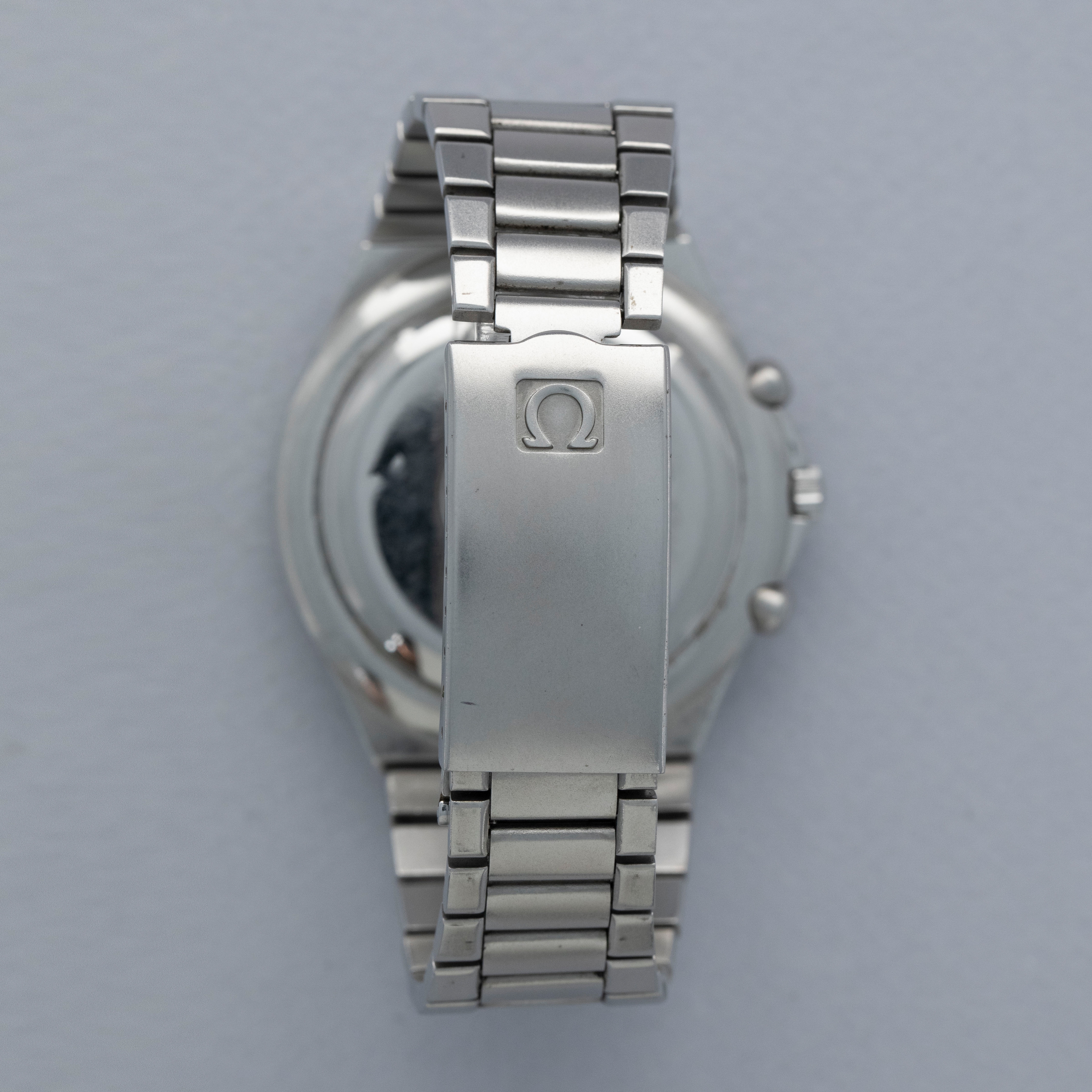
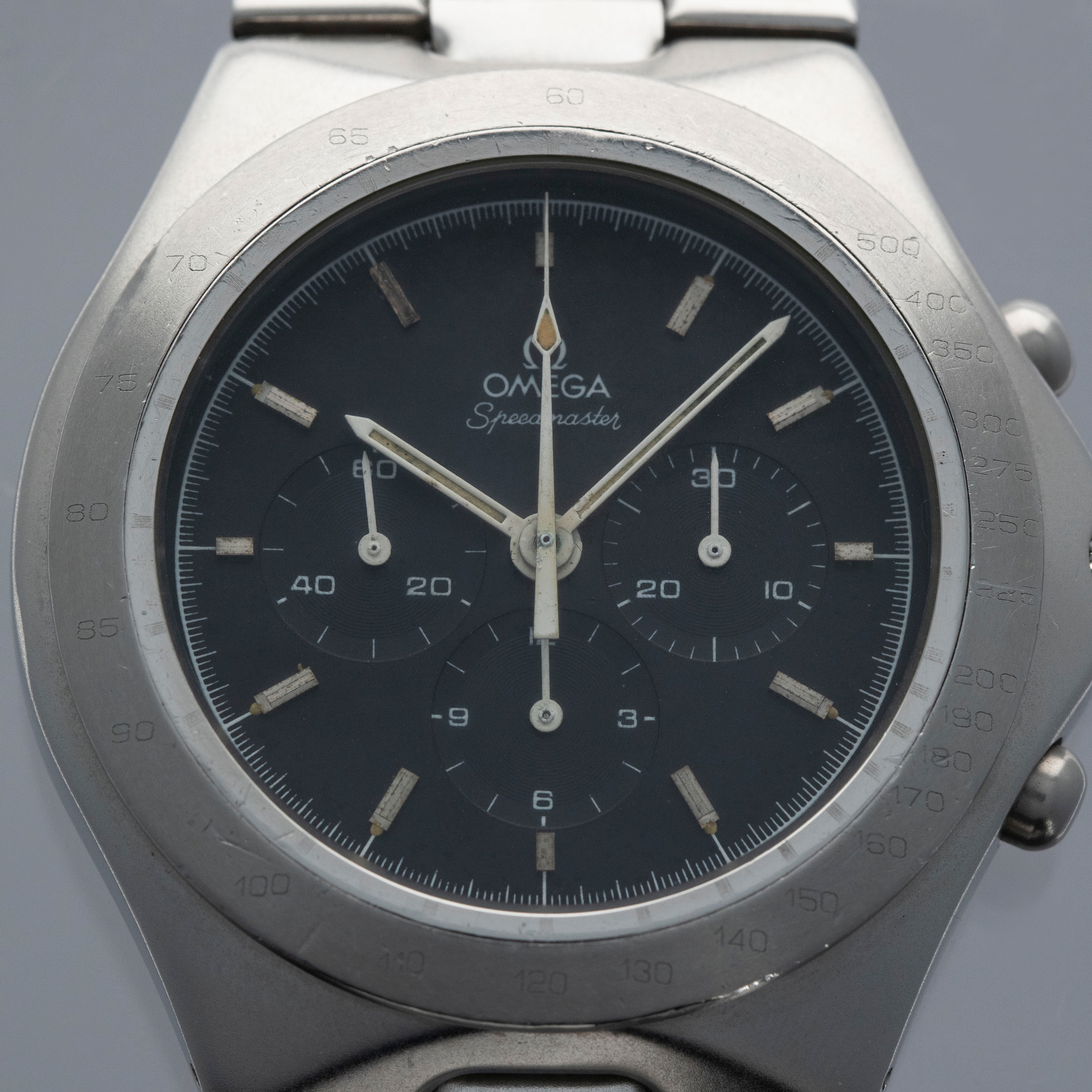
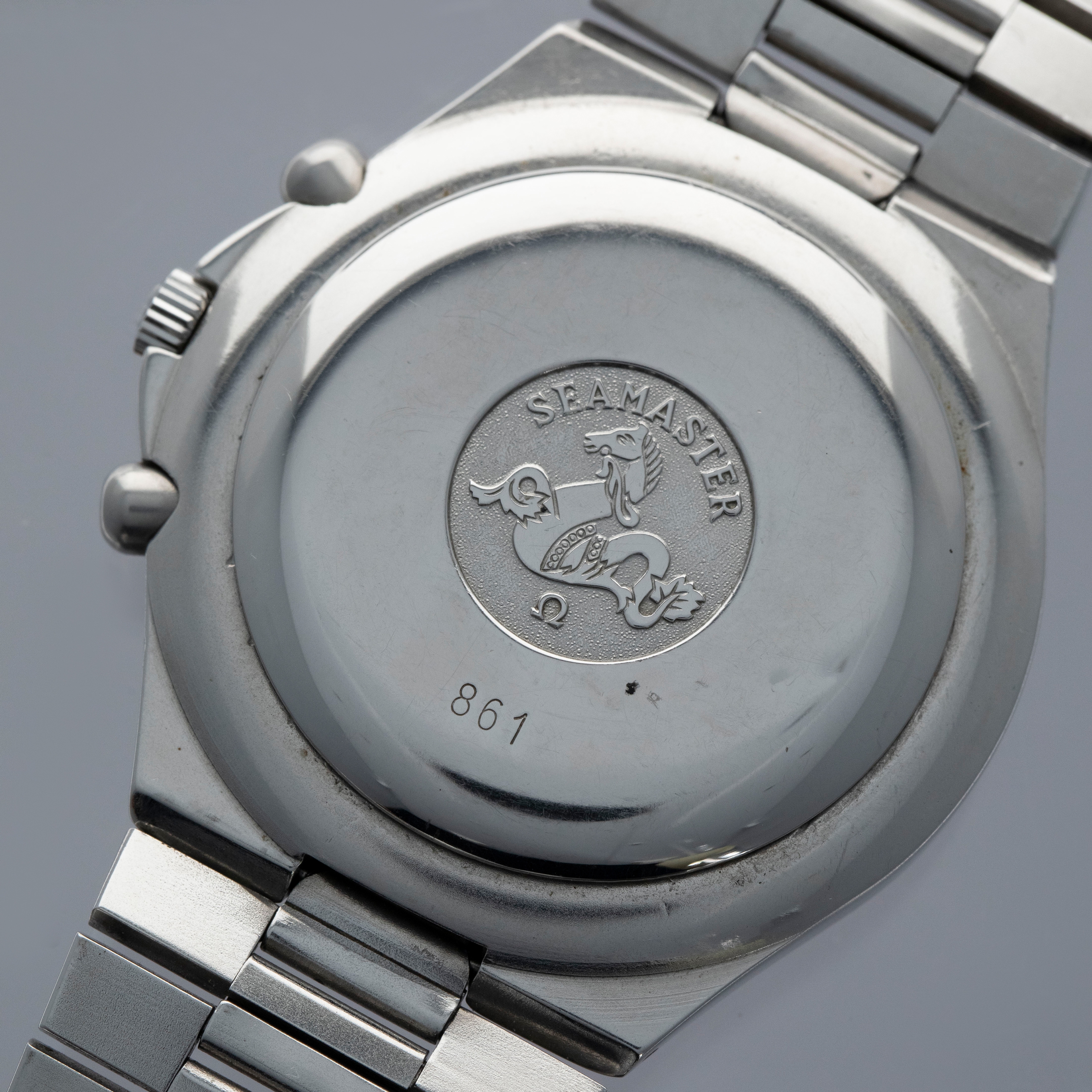
The reference ST 345.0803 was offered with both black and grey dials, alongside two-tone variations using the same underlying case architecture. This black-dial example is powered by Omega’s celebrated calibre 861, the robust cam-operated chronograph movement that succeeded the calibre 321 and powered the Speedmaster Professional for more than two decades. Teutonic Speedmasters were produced for a comparatively short period and sold principally in West Germany, Switzerland and neighbouring markets, making them far less frequently encountered than conventional Speedmasters. Their unusual Seamaster-signed case backs and externally engraved movement numbers further distinguish this fascinating, market-specific chapter of Omega chronograph history.
Loupe This Scorecard
Grade
M 8
Status
Vetted & Approved
Included
Watch Only
Est. value range
$1,500 – $2,500
The Details
Brand
Omega
Dimensions
43mm
Model
Teutonic Speedmaster
Movement
Manual-wind Omega calibre 861
Reference
ST 345.0803
Bracelet
Integrated stainless steel bracelet
Year
Circa 1982
Condition
Very good
Material
Stainless steel
Included
Watch only
Dial Color
Black
THE CONSTRUCTION
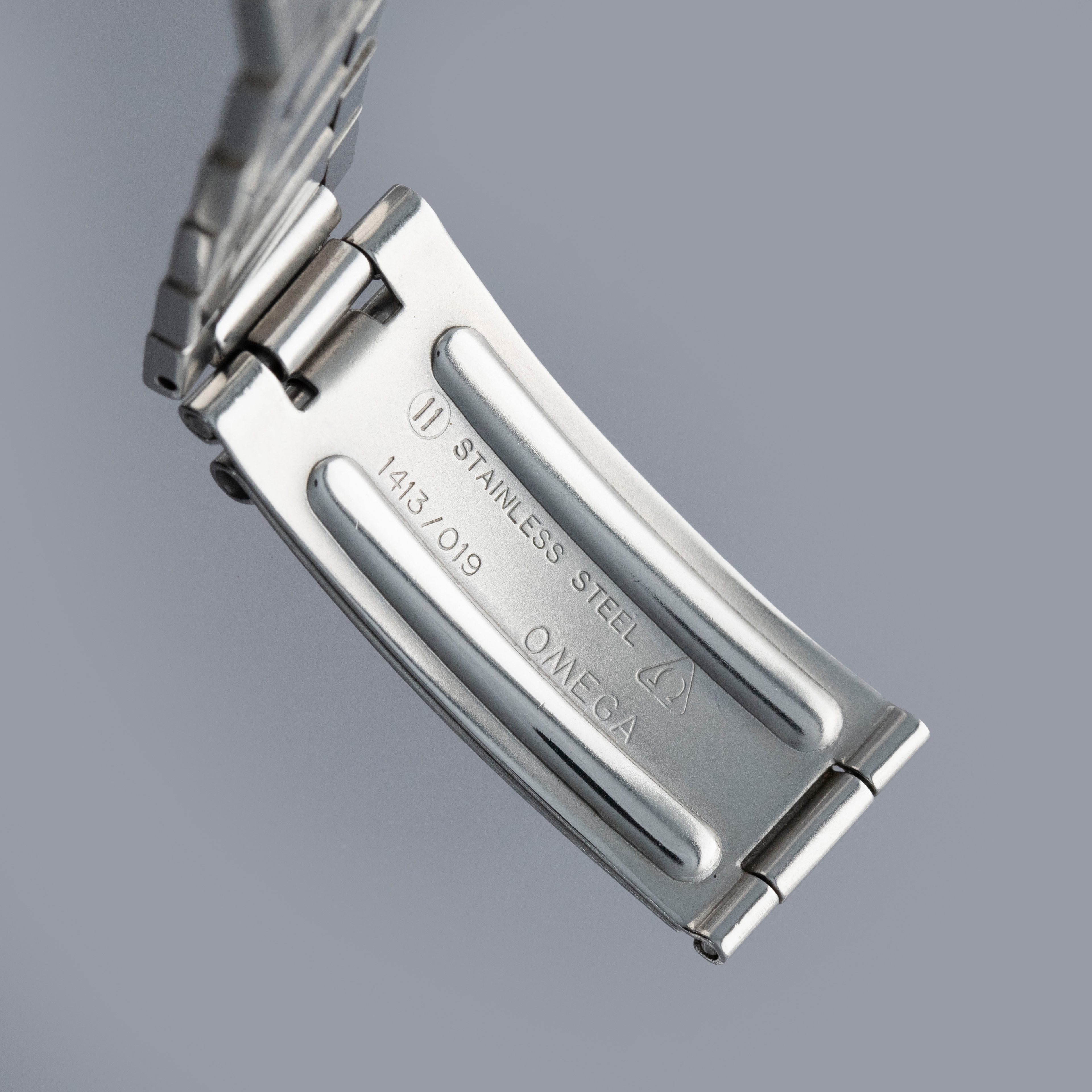
The bead-blasted stainless steel case flows directly into its factory integrated bracelet, creating a seamless, purposefully modern profile unlike any conventional Speedmaster. The case back bears the Seamaster hippocampus emblem and calibre designation, details commonly found across Omega’s German-market Speedmaster family.
THE MOVEMENT
The manually wound calibre 861 is one of Omega’s most important chronograph movements. Introduced in 1968 as the successor to the calibre 321, its robust cam-operated construction, high-frequency balance and dependable performance made it the long-serving engine of the Speedmaster Professional and several of Omega’s most collectible chronographs.
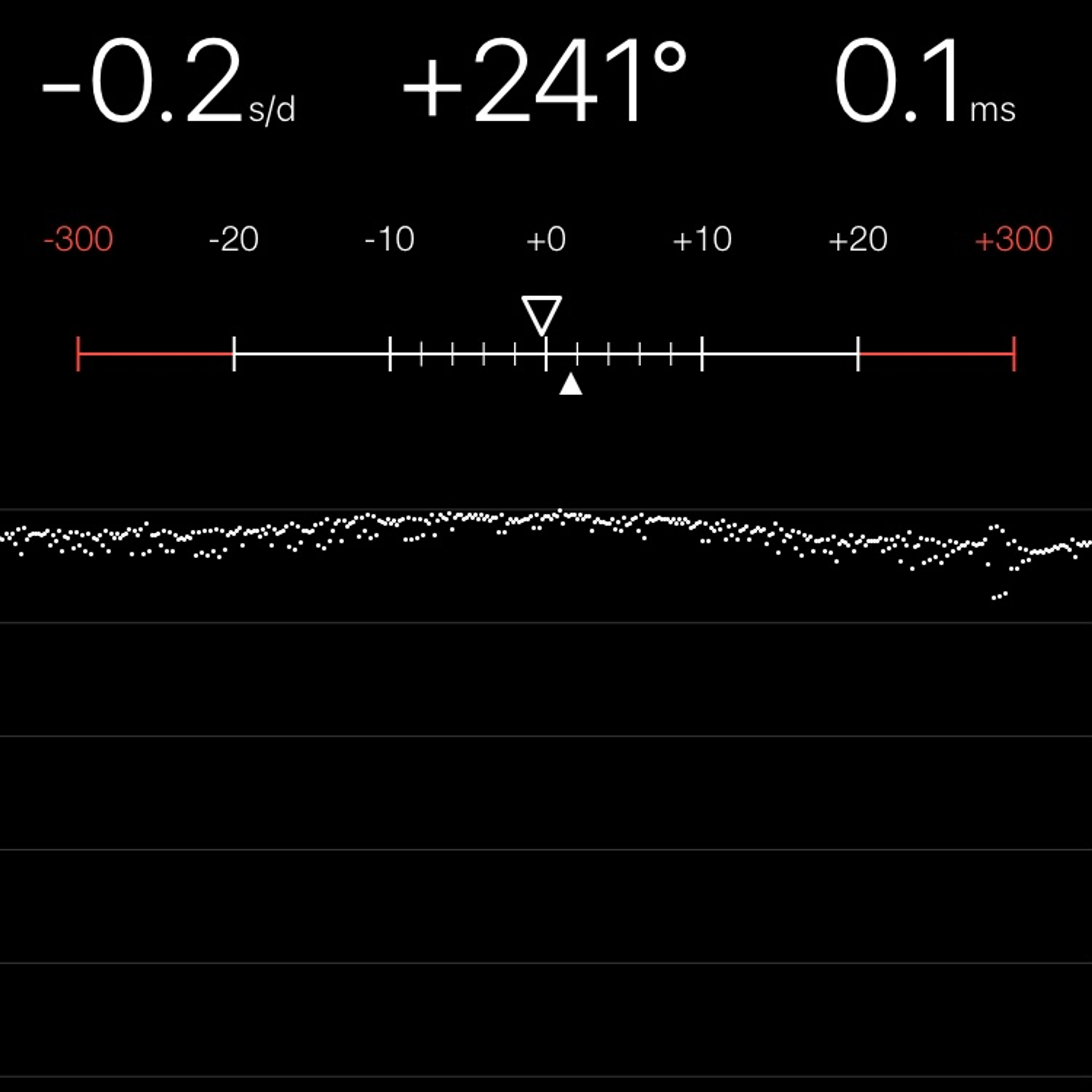
TIMING MACHINE READOUT
This reading was taken (crown down) with a ONEOF Accuracy Boutique Edition timing machine at time of cataloging. It is provided as a courtesy only, and shall not be construed as a warranty or guarantee of any kind. Please refer to our terms and conditions of sale for more information.
Condition
Watch is in overall very good condition. The steel case shows a number of surface scratches and nicks. The case back has surface scratches and nicks, while retaining well-defined engravings and a well-preserved case back medallion. The bezel shows wear, with scratches and nicks throughout. The black dial is excellent, with oxidation to the hour markers. The hands show some degradation to the white finish and discolouration to the luminous material. It is fitted with an integrated steel bracelet showing surface scratches and moderate play between the links. The bracelet is fitted with 20 links and fits approximately a 7¼” wrist.
Our Perspective
The Teutonic Speedmaster is a compelling reminder of how adventurous Omega’s design language became during the late 1970s and early 1980s. It retains the mechanical heart and chronograph identity of the classic Speedmaster, yet presents them in a radically different integrated-bracelet form created for a specific European market. Still relatively obscure beyond committed Omega circles, the ST 345.0803 offers rarity, strong period design and one of the manufacture’s most respected manual-wind movements.


Eric Ku
Co-founder
