The Patrick Parrish Collection


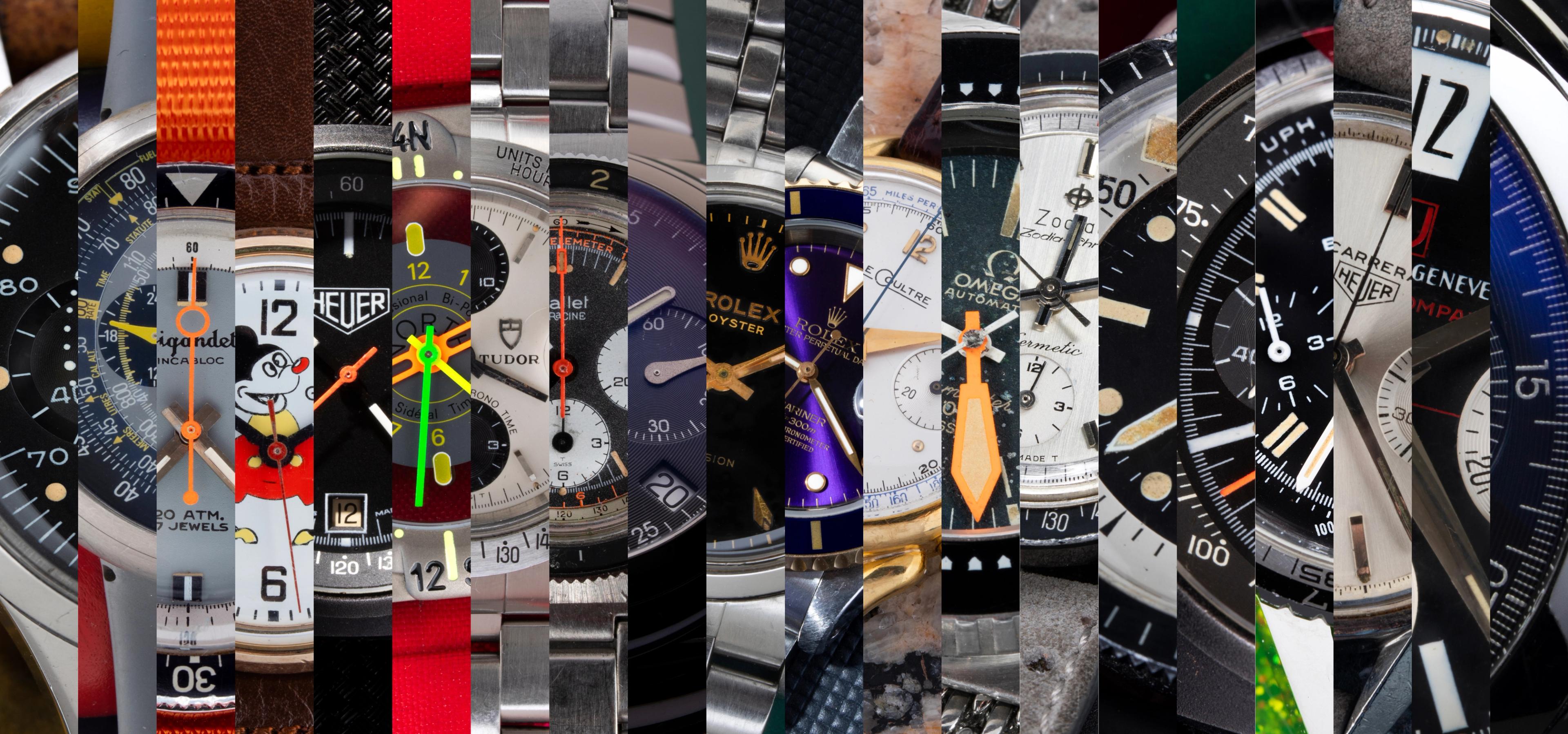
The Patrick Parrish Collection represents decades spent pursuing some of the most interesting, unusual and charismatic watches of the 20th century. Carefully assembled over many years, the collection features more than 40 pieces personally selected by Patrick for their originality, design, mechanical intrigue, and the stories they carry. Rather than following trends or chasing only the most obvious names, the collection reflects a deeply personal approach to collecting, where each watch has been chosen not simply for what it is, but for why it mattmatters to Patrick.
Patrick Parrish is a New York-based design expert, collector, and dealer. After more than twenty-five years operating a street-level gallery, he currently works from Patrick Parrish Studio in the Brooklyn Navy Yard. Parrish earned a BFA from Florida State University and an MFA from the School of the Art Institute of Chicago. He is known for his popular Instagram and Substack, both under the moniker MONDOBLOGO, and is the author of The Hunt: Navigating the Worlds of Art & Design.
As a gallerist, Patrick Parrish Gallery was known for exhibiting unusual and sometimes overlooked designers and artists of the 20th and 21st centuries. Over the years, Parrish has placed important works in the collections of the Brooklyn Museum, Cooper Hewitt, MoMA, and the San Francisco Museum of Modern Art, among others. In 2022, Parrish opened The Secret Watch Shop, the culmination of decades of focused research into tool watches of the 1950s–1980s.


"My Brother's Watches"
Having a cool big brother is a girl’s greatest advantage. Growing up in small-town Florida, my brother Patrick offered my first glimpse of a life that might be bigger than where we were. He turned me onto music (DEVO, The Kinks), magazines like Interview and Paper, and vintage shopping, not only because it’s what we could afford, but because it made us look different from everybody else.
Nonconformity was always the point. It still is. That instinct – to look past the obvious and find meaning in what others overlook – defines Patrick’s watch collection.
He’s been obsessed with watches for as long as I can remember. But the story starts earlier.
Our grandfather Marion was a U.S. Army Air Forces photographer, documenting war planes as aviation evolved at breakneck speed. He made composite images, airbrushing out sensitive details—early acts of editing. His photographs, and his stories, shaped our fascination with flight. For Patrick, that focus narrowed: the watches pilots relied on. Tools built for precision under pressure.
Then there was our great-uncle Henry. We called him “Hinky.” Marion’s brother. A Manhattan banker who later became a landscape architect. Quiet, exacting, deeply elegant. After he died, Patrick found one of his watches in a sock drawer: a Vacheron & Constantin moon phase travel watch. Small. Intricate. Exacting. Less an accessory than a revelation. That was the beginning.
We grew up in Pensacola, the cradle of Naval Aviation. The Blue Angels were a constant presence overhead. But Patrick was never just watching the planes. He was drawn to the instruments. Pilot chronographs weren’t decorative—they were essential. This was before digital everything. Your watch was a tool. Sometimes, it could save your life.
That idea—function first—became his north star.
Years later, in New York, one watch sharpened it: a Bulova Accutron Astronaut on a photographer’s wrist. Powered by a humming tuning fork. Built for the space age. Worn during the Gemini program. When Patrick held it to his ear and heard that electric hum, it clicked. This was a watch built to solve a problem, at a specific moment in time.
From there, the collection grew with discipline. Not by chasing icons, but by following that same logic. Watches like the Seiko Pogue—a bright, slightly offbeat chronograph worn on a NASA mission—fit perfectly. Historically grounded. Technically interesting. Just outside the obvious canon.
What he built is more than a collection. It’s a point of view. Focused on the 1960s through 1980s, it traces a moment when ambition expanded—into the sky, the ocean, space—and watchmaking had to keep up. These were instruments for extreme environments: cockpit, deep sea, racetrack. They had to work. And because of that, they are so cool.
What makes the collection distinct is not just what’s in it, but how it came together. Long before the internet flattened taste, Patrick was digging through flea markets, pawn shops, and antique fairs. Buying what spoke to him, not what the market dictated. These watches weren’t trophies. They were worn. Lived with. Found quietly, and kept that way.
Becca Parrish
--
--
--
--
--
--
--
--
--
--
--
--
--
--
Rare, valuable and interesting watches — verified and available to the highest bidder.